
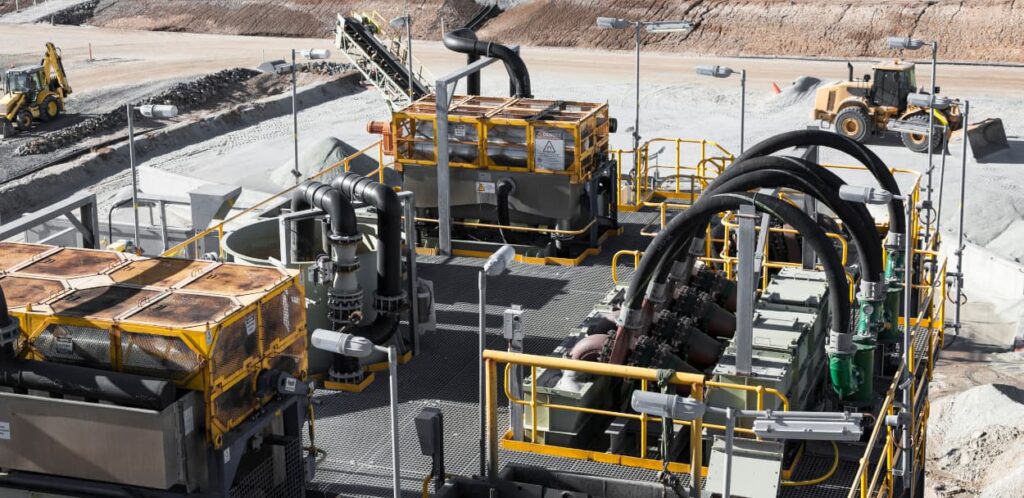
Chile has announced an ambitious national lithium strategy that seeks to treble yearly lithium output by 2034. Lithium production is for global demand for battery metals develops in tandem with the expansion of electric vehicles and energy storage. This entails drafting two new direct-award contracts for submission. Chile is also modifying and advancing significant contracts, such as new CEOL terms at Salar de Maricunga with Chile’s state miner and partners. The development represents a multifaceted effort to increase supply capacity and diversify project platforms. These contracts would support new production zones outside of traditional basins like Atacama. This helps to increase volume and diversify production by geography. Chile’s lithium demand contributes to increased supply, battery manufacture, and pipelines and helps to reduce supply imbalances. Lithium production relies on extraction equipment, evaporation ponds, pipeline networks, and chemical conversion plants. These networks depend on hotline tap clamps to ensure safety and efficiency.
Hotline tap clamps are mechanical fittings bolted around an existing, pressurized, and live pipeline. It creates new connection points on an existing, operational pipeline without shutting down the flow of fluid. In evaporation pond networks, workers use a hotline tap clamp to install a new valve and pipeline connection that allows them to reroute the brine flow. Hotline tap clamps connect new fields of evaporation ponds to the main supply headers. This helps integrate the new capacity into the existing operating system without any production downtime. The clamps also allow the installation of the instruments on a live line. It helps provide real-time data without interrupting the flow to perform the installation.
Quality assurance of hotline tap clamps used in lithium infrastructure
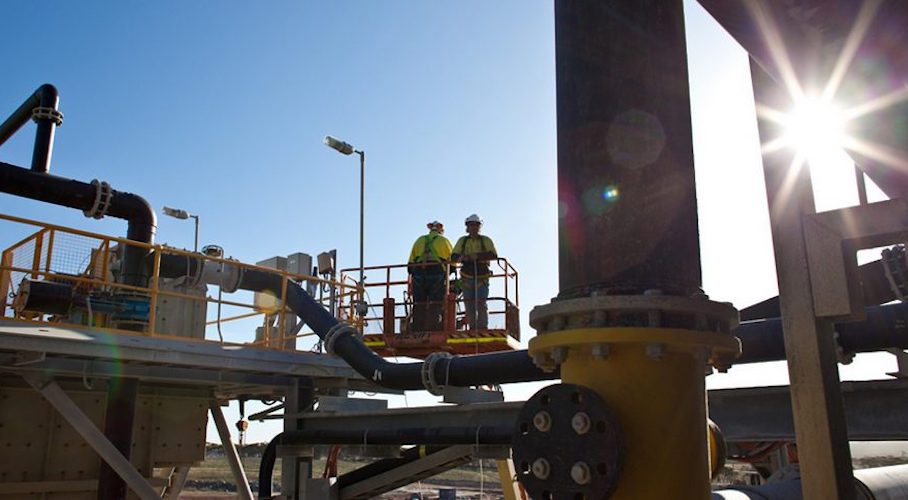
Quality assurance for lithium infrastructure ensures safety, reliability, and regulatory compliance in high-risk electrical environments. It prevents quality failures that can lead to arc flashes, equipment damage, or extended downtime. Quality assurance for the hotline tap clamps includes implementation, testing, and verification. Material verification for the clamps includes certification, mechanical property testing, and electrical performance. It also includes design verification that prevents clamp deformation, loosening, or overhead in service. During manufacturing, quality assurance controls include process control charts, in-line inspection checkpoints, and batch traceability. This reduces variation and flags defects before clamps leave the factory. After shipment, QA practices check field failure data, conduct conductor root-cause analysis on failures, and update specifications based on real-world performance.
The application of hotline tap clamps in Chile’s lithium infrastructure
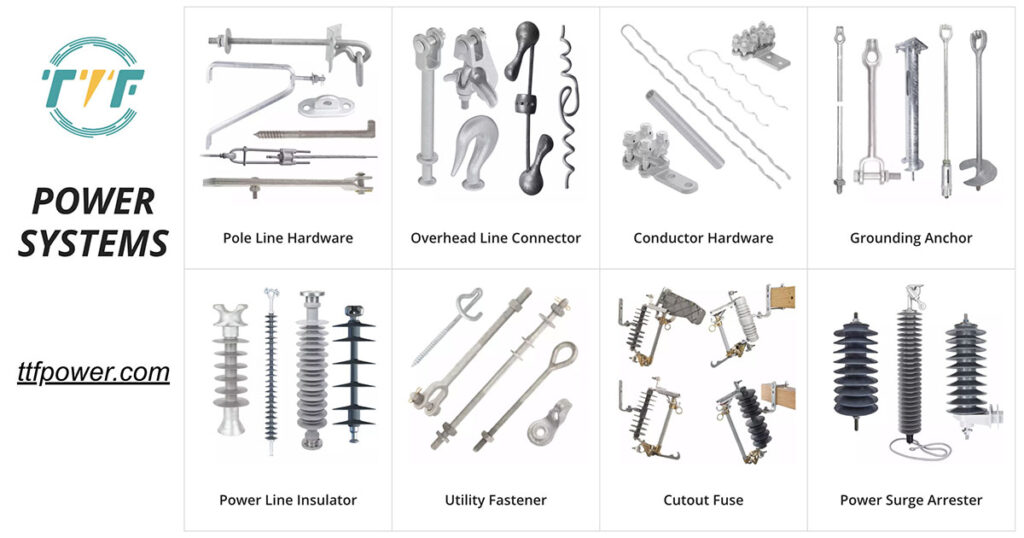
Hotline tap clamps are electrical connectors that enable safe, reliable, and flexible distribution of electricity without service interruption. They support Chile’s decarbonization and grid integration in lithium extraction, processing, and energy storage systems. Here are the functions of hotline tap clamps in lithium infrastructure.

- Enabling live-line connections for energy projects—hotline tap clamps allow technicians to connect new circuits onto live conductors. Live-line capability supports integration of solar and wind power into lithium facilities.
- Easing expansion of renewable-powered lithium systems—hotline tap clamps permit phased expansion. This includes adding circuits or equipment without shutting down existing operations.
- Supporting high-current transmission with low loss—the clamps ensure low contact resistance. This helps maintain efficient current flow from main transmission lines into secondary loads.
- Reinforcing grid stability and load distribution—hotline tap clamps help balance electrical loads across phases and distribution paths. This contributes to grid stability to combine variable renewable output with industrial electrical demands.
Lithium meets global demand in Chile’s energy sector.
Lithium is an important substance in current energy systems because it allows for high-density, rechargeable energy storage on a large scale. It is critical for electrification in the transportation, power production, and industrial sectors to ease the transition from fossil fuels. Here’s how lithium meets world energy demands.
- Lithium in electric vehicle batteries—lithium-ion batteries offer high energy density, long cycle life, high charge-discharge efficiency, and favorable weight-to-power ratios. This makes it essential for passenger EVs, electric buses, and commercial fleets.
- Grid-scale energy storage systems—lithium-ion battery energy storage systems—stabilize grids for electricity delivery. This is by shifting energy from peak generation, providing frequency regulation, and supporting voltage stability.
- Renewable energy integration—lithium storage complements wind and solar systems integrated into lithium production. This is by reducing intermittency constraints, increasing renewable penetration, and improving dispatchability.
- Industrial electrification and backup power—lithium batteries support data center backup systems and telecommunications infrastructure. They also support industrial microgrids and remote operations.