
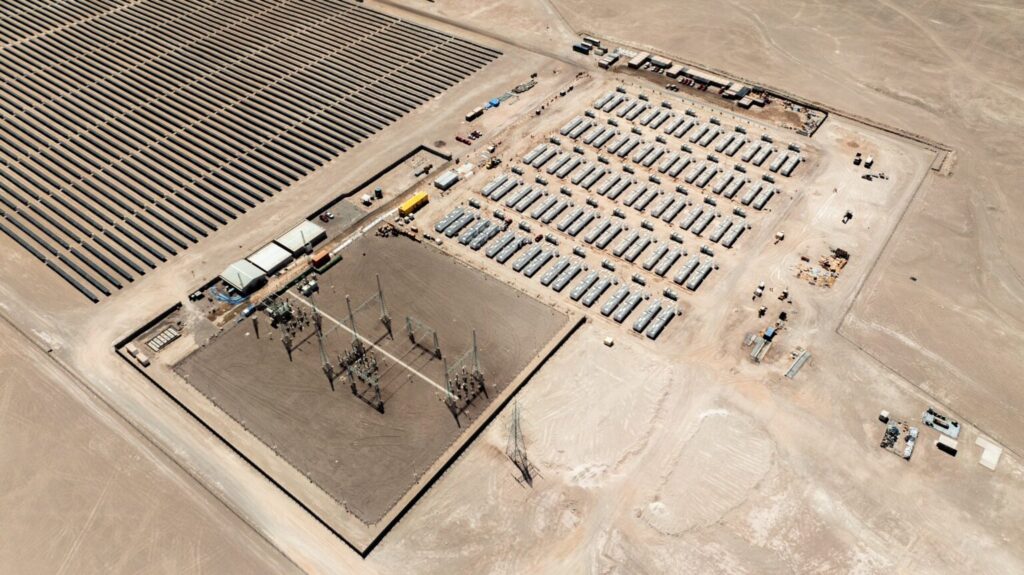
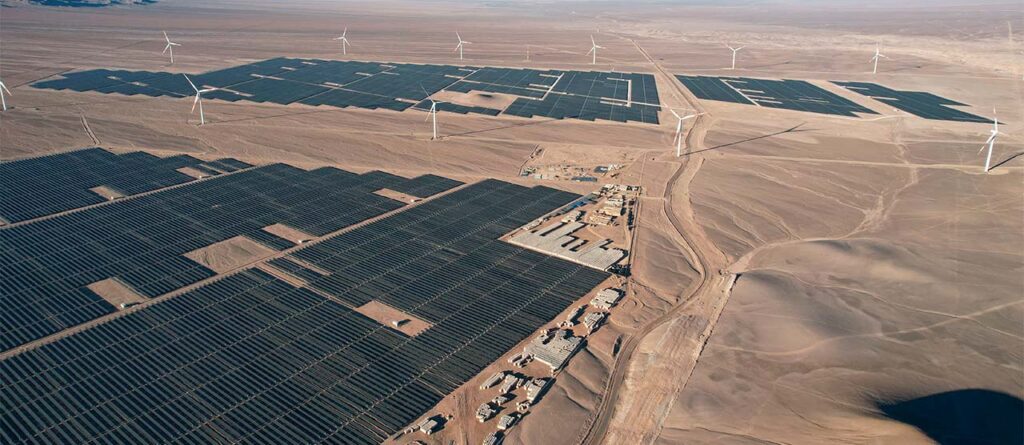
Pacific Hydro, an Australian-based power producer, secured environmental approval for a 190.7 MWp solar project with a 200 MW BESS in Chile. The solar farm with storage in the Santiago Metropolitan Region will connect to the national grid through the Nogales-Polpaico transmission line. The project will include the installation of about 257,000 solar modules rated 742 Wp each. It will also include the construction of the Don Patricio 33/220-kilovolt substation, 42 transformation centers, underground 33-kV cabling, and power conversion systems for the battery storage facility. Pacific Hydro will also build a 1.17 km, 220 kV high-voltage transmission line to connect the substation to the grid. Through these installations, Pacific Hydro addresses grid congestion, curtailment, and structural challenges. The BESS system will enable energy shifting, absorbing excess solar generation and releasing power during evening peak demand. These connections use robust hardware such as fiberglass secondary connectors.
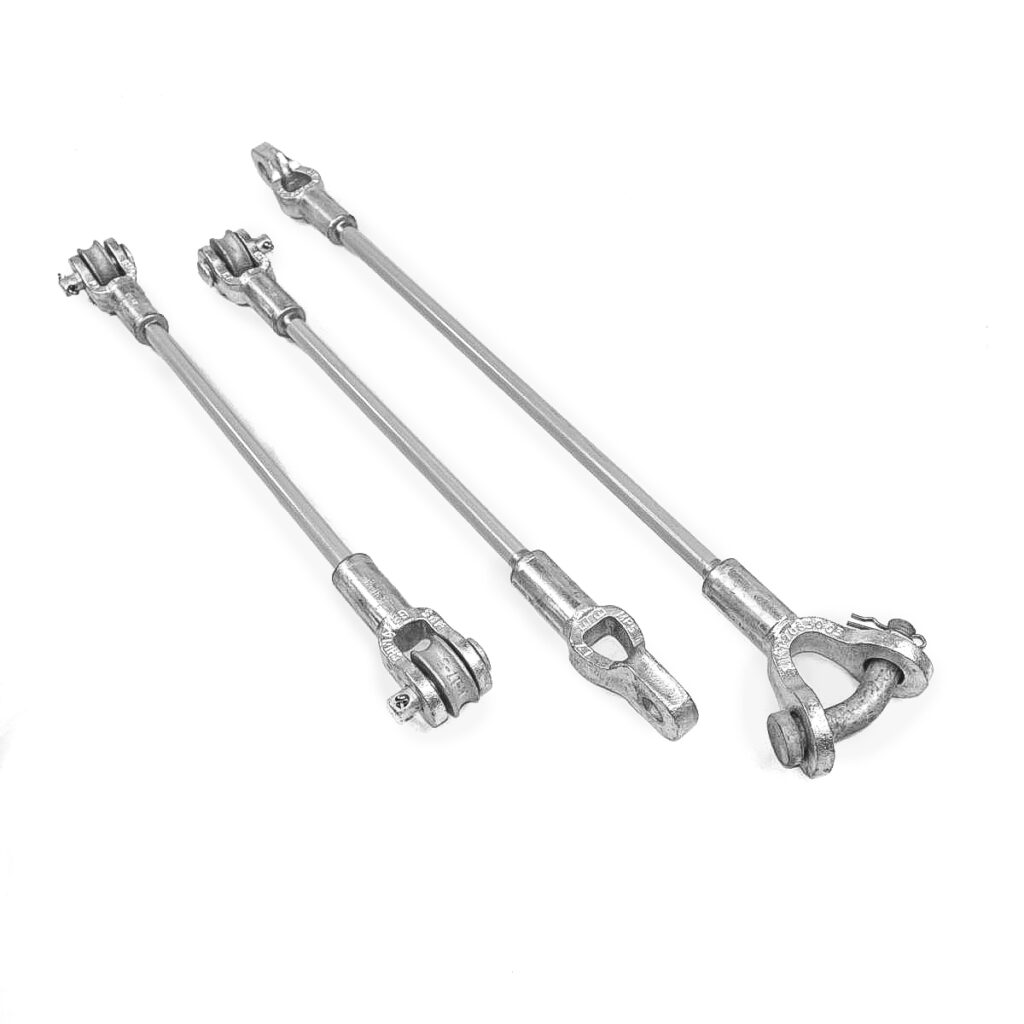
Fiberglass secondary connectors isolate a grounded structure from its guy wires anchored in the ground. In solar farms, the connector isolates guy wires to prevent energization of structures through faults or lightning strikes on plant electrical systems. The secondary connector prevents step-and-touch potentials for personnel and animals near grounded structures. Fiberglass secondary connectors provide stability for angle towers, dead-end towers, and river crossing towers. Additionally, they allow line workers to perform maintenance on or near towers without the risk of energizing guy wires. The non-corrosive nature of the fiberglass makes it ideal for long-term reliability with minimal maintenance.
Quality assurance for fiberglass secondary connectors for use in electrical systems
Quality assurance for fiberglass secondary connectors ensures long-term reliability, safety, and regulatory compliance in electrical distribution systems. The connectors serve in secondary networks for mechanical support and electrical insulation. A quality-assured connector addresses material integrity, mechanical performance, electrical insulation properties, and environmental durability. Fiberglass secondary connectors are from glass fiber-reinforced polymer. The QA process begins by verifying raw materials, checking mechanical performance, electrical insulation, and dielectric testing. Fiberglass secondary connectors help deliver reliability with minimal maintenance in distribution networks. Quality assurance ensures the components meet standards and demands while reducing operational risks for utilities.
Functions of fiberglass secondary connectors in solar and BESS development in Chile
Fiberglass secondary connectors are critical components in the development of solar photovoltaic and battery energy storage systems in Chile. They support the distribution, collection, and balance-of-plant levels. Using the connectors enhances the operational resilience and scalability of solar and BESS projects in Chile. Here are the functions of the fiberglass secondary connectors in solar and BESS projects in Chile.
- Electrical insulation and safety—fiberglass secondary connectors isolate secondary conductors and support low- to medium-voltage connections. Their high dielectric strength reduces the risk of leakage currents, flashovers, and accidental contact.
- Mechanical support in secondary networks—solar and BESS projects rely on secondary cabling for inverters, transformers, control systems, and auxiliary loads. The secondary connectors provide mechanical anchoring and strain relief for the conductors.
- Resistance to environmental conditions—fiberglass secondary connectors are corrosion-resistant and non-reactive. They are also resistant to UV radiation, moisture, and chemical exposure. This supports a long service life with minimal degradation.
- Support for modular and scalable project design—secondary connectors enable phased construction. They do so by offering consistent electrical insulation and mechanical performance across installation units.
Infrastructure supporting the development of solar and BESS projects by Pacific Hydro
Pacific Hydro’s solar and battery projects in Chile rely on robust infrastructure for the safety and efficiency of power production and delivery. The components form a complex, grid-integrated energy asset designed to generate, condition, and deliver power into Chile’s grid. These include:
- Power generation infrastructure—the 270,000 high-capacity PV modules are engineered for optimal insolation and minimal shading losses. They include inverter and power conditioning systems that convert DC to usable AC for grid integration.
- Energy storage and conversion systems—the 200 MW BESS stores excess daytime solar output and dispatches energy during peak demand. It includes power conversion systems to manage bidirectional DC/AC flow.
- Electrical substations and transformer networks—this includes the Don Patricio 220 kV substation and 42 transmission centers.
- Transmission for grid integration—the 1.17 km and 220 kV high-voltage line connects the Don Patricio substation to a tap-off point in the Nogales-Polpaico transmission corridor. They link the generation and storage facility into Chile’s National Electrical System.