
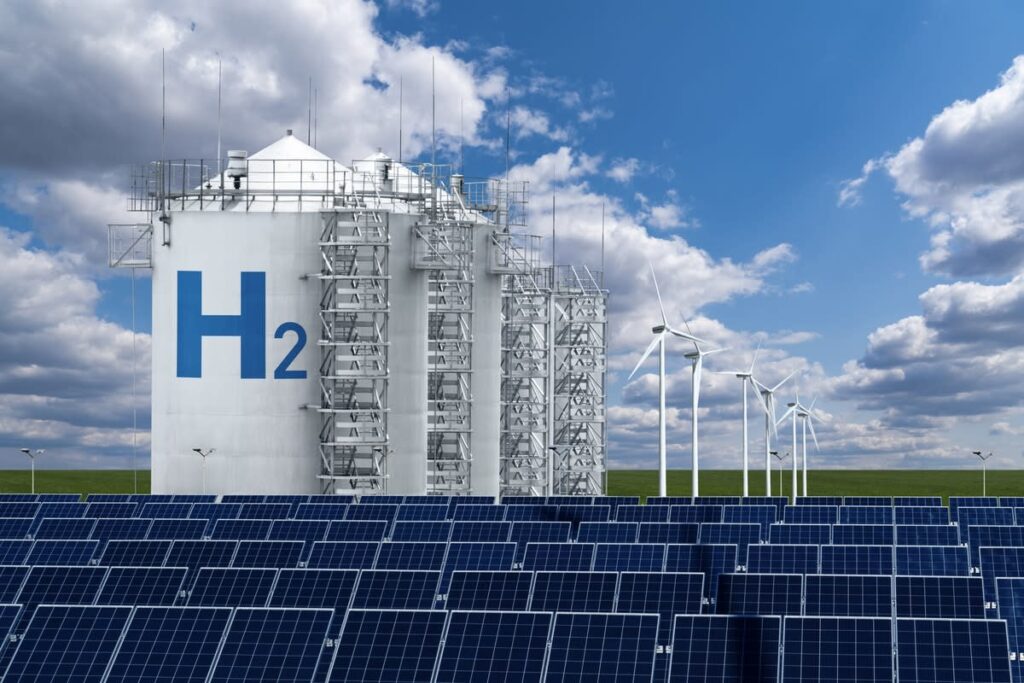
A gas pipeline in Peru recently broke, revealing a structural weakness in the country’s gas-to-power value chain. The 730 km pipeline carries Camisea gas and natural gas liquids from the Amazon region to Lima on the coast. This reveals dangers associated with dependence on the transport system and supports claims for new pipelines and the establishment of a regasification import project. The rapture emphasizes the need for parallel pipelines, LNG import terminals, and gas storage facilities. This further amplifies the necessity for endorsing solar and wind installations, hybrid systems with energy storage, and decentralized generation approaches. It aids in reducing dependence on centralized gas transportation networks. Backing renewable energy propels the transformation in the operations, investments, and risk management of the gas industry. Greater integration of renewables requires turbine upgrades for improved functionality. Using helical anchors provides structural reinforcement, load distribution, and regulated motion
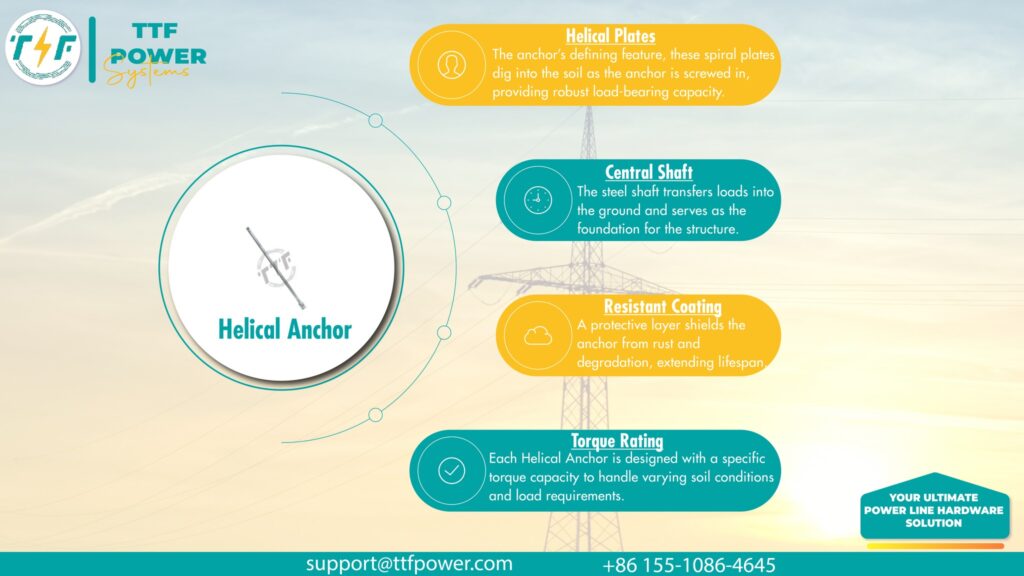
Grounding anchors serve as foundational technology that ensures the physical stability and operational resilience of energy assets. The anchors secure the natural gas pipeline networks against environmental forces. The anchors resist forces by transferring the pipeline’s load through weak surface soils to stable strata. Helical anchors are able to withstand the lateral and vertical forces. They prevent pipeline racking and maintain the structural alignment of the assets. The anchors also provide foundation support for key infrastructure such as compressor stations, valve stations, and metering units. Helical anchors support the foundations for hybrid plants where gas turbines operate alongside solar panels or wind turbines. They support the structures for gas infrastructure and renewable energy assets.
Quality assurance for the helical anchors used in pipeline and renewable infrastructure integration
Enhancing quality assurance for helical deadends ensures mechanical grip, reliability, environmental durability, and compatibility with hybrid energy systems. Helical deadends are non-damaging to conductor termination and cable anchoring. This makes them crucial where pipelines and power systems coexist. The quality assurance process includes tensile strength validation of wires, metallurgical analysis, and verification of galvanization thickness. It also includes surface protection, mechanical performance testing, dimensional accuracy, and electrical and thermal performance. Quality assurance checks proper grounding and bonding, avoidance of induced currents, and compliance with cathodic protection systems. Modern QA systems incorporate batch-level traceability, statistical process control, and non-destructive testing. Effective QA for helical deadends delivers reliable conductor anchoring and reduced maintenance service life. It also ensures safe integration of energy and pipeline infrastructure.
Key roles of helical anchors in gas pipeline integration with Peru’s renewable infrastructure
Helical anchors enable load transfer, stability, and multi-system compatibility. The anchors help deliver structural stability, environmental efficiency, and adaptability to complex terrain. They offer load resistance, buoyancy control, seismic resilience, and rapid deployment. This makes the crucial components in modern multi-system energy lines. Here are the roles of helical anchors in gas pipeline integration with renewables in Peru.
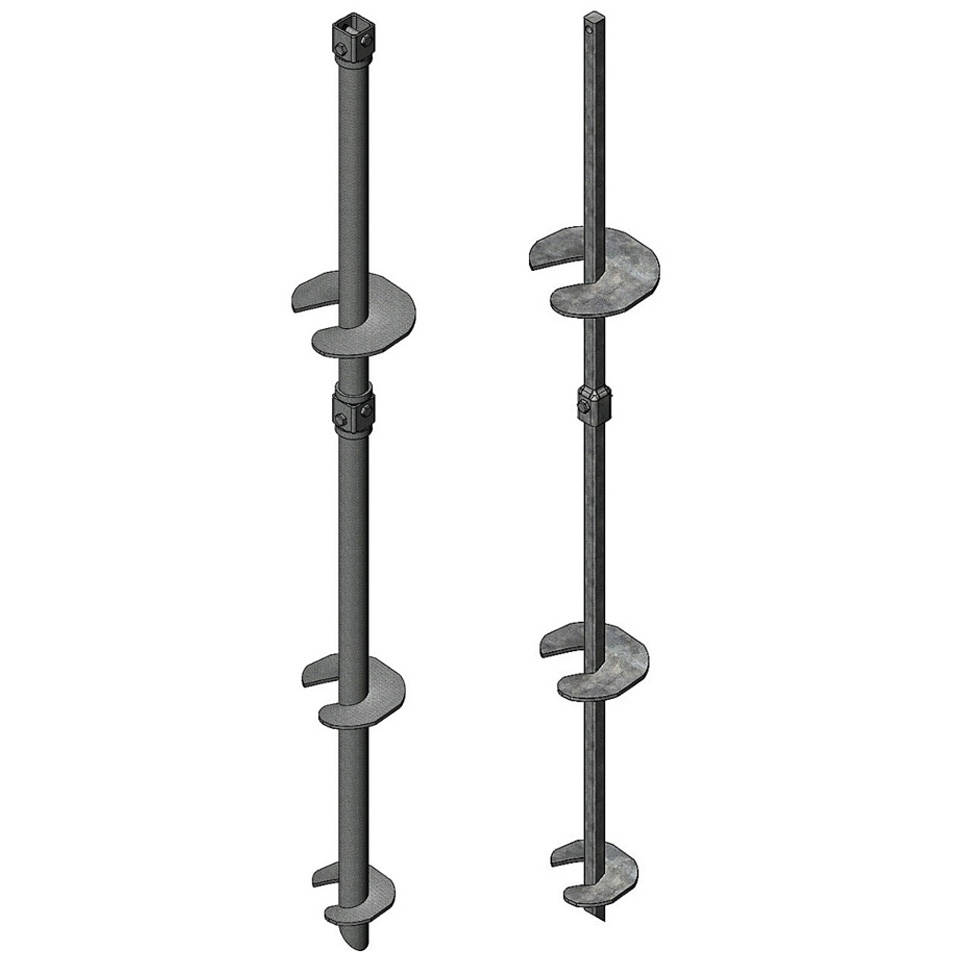
- The foundation is stabilized in mixed infrastructure lines—the anchors provide deep foundation support for both pipeline and renewable assets. They transfer loads and ensure stability in regions with soil variability.
- Lateral load resistance—helical anchors resist uplift forces in lightweight renewable structures. They also provide lateral stability for pipeline supports.
- Pipeline buoyancy control and anchorage—helical anchors secure pipelines against buoyant uplift. They also maintain burial depth and stabilize pipelines in river crossings.
- Deployment for remote projects—the anchors provide fast installation with minimal excavation and reduced need for concrete foundations.
- Compatibility with multi-system infrastructure—pipeline integration with renewables needs coordination between electrical and mechanical systems. The anchors support both systems using a common foundation solution.
Infrastructure employed to connect gas pipelines with renewable energy systems.
This integration in Peru requires a multi-tiered, hybrid system framework that emphasizes resilience, redundancy, and longevity. Essential infrastructure comprises:
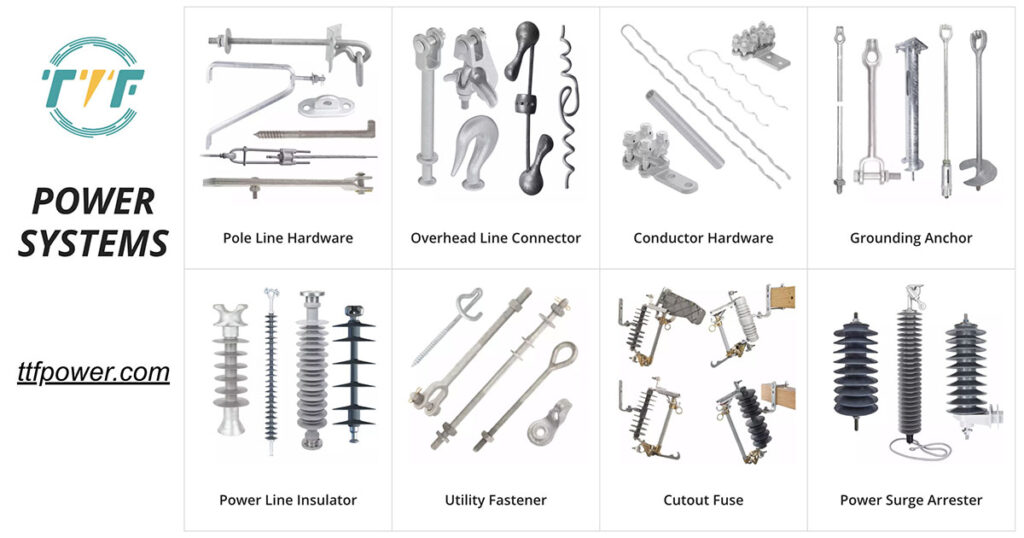
- Essential gas transportation and support infrastructure—this comprises high-pressure transmission pipelines along with compressor and metering stations.
- Gas-powered power stations—this encompasses combined cycle gas turbines, open cycle gas turbines, and dual-fuel functionality.
- Integration of renewable energy infrastructure—gas pipelines connect with solar PV, wind farms, and hybrid power plants. The infrastructure provides grid interconnection sites and management systems for synchronized distribution.
- Battery energy storage systems offer short-term balancing for renewable variability and decrease dependence on gas for quick response.
- Intelligent grid and digital management framework—this encompasses supervisory control and data collection, sophisticated energy management systems, and predictive maintenance solutions