
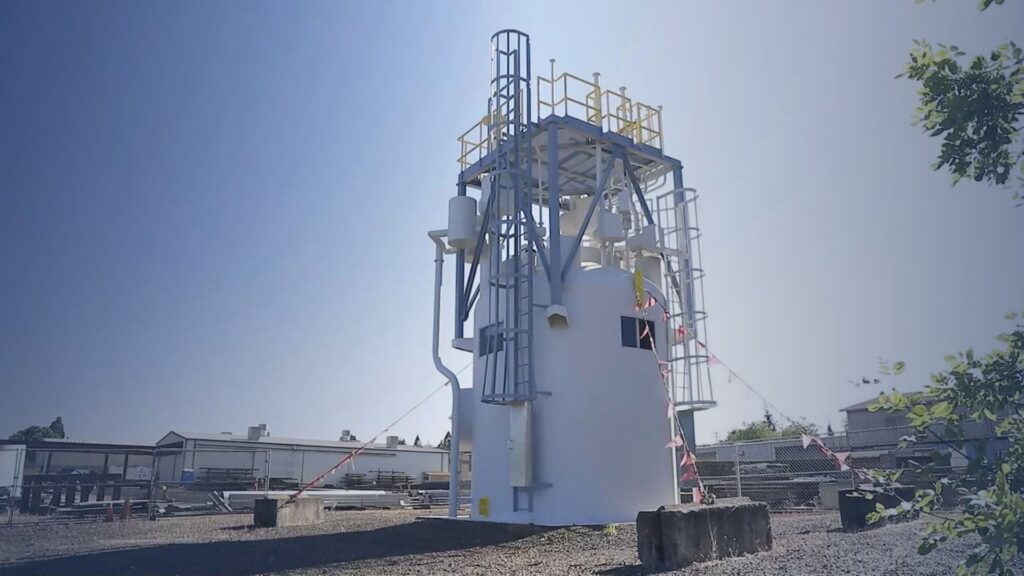
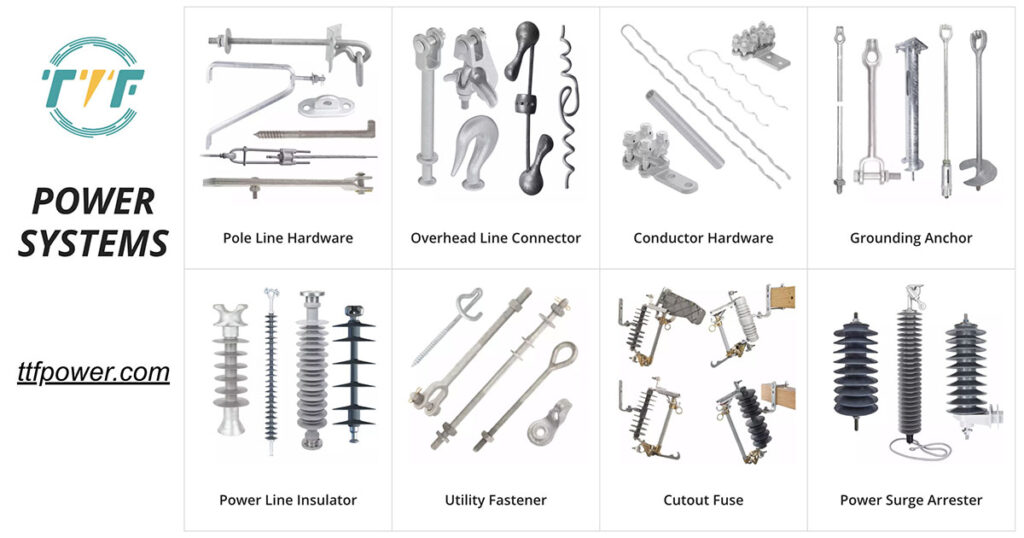
Peru recently signed a new law establishing a regulatory framework to promote nuclear power generation as part of the energy mix. The law targets the installation of small modular reactors (SMRs), leveraging the country’s uranium. SMRs provide lower upfront capital costs, scalable deployment, and better fit for smaller national grids. Nuclear power development will depend on collaboration with Argentina in reactor technology, human resource training, and scientific research. This will reflect a knowledge transfer model rather than domestic technological leadership. The development of nuclear power in Peru arises from growing electricity demand from the mining sector and industrialization, decarbonization goals, and grid stability. To achieve the success of this development, Peru has to overcome financial constraints, institutional gaps, technical capacity, grid limitations, and public acceptance. The development also relies on robust infrastructure like power line hardware for grid interconnection. Distribution insulators ensure reliable and isolated operation of the electrical systems.
Electrical insulators prevent unintended current flow, protect equipment, and maintain the integrity of safety systems for preventing accidents. Distribution insulators isolate conductors, prevent short circuits, and protect transformers, generators, and motor control centers. They ensure electrical independence of safety circuits and connect the plant to the external grid. The insulators are also able to resist moisture, chemicals, salt, temperature extremes, and high radiation levels. Distribution insulators in nuclear plants serve as a point of monitoring for electrical health through insulation resistance testing. They help detect early signs of degradation, such as cracking or contamination. Using the insulators allows the plant to reliably transmit the amount of power it generates to the external electrical grid.
Quality assurance for distribution insulators used in nuclear power plants
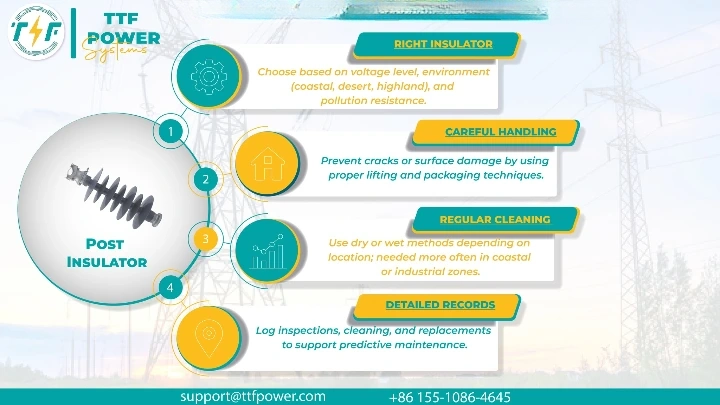
Enhancing quality assurance for distribution insulators ensures electrical integrity under extreme environmental, mechanical, and radiological conditions. The QA programs for insulators used in nuclear environments must align with nuclear-specific codes and international standards. Compliance ensures qualification for seismic, thermal, and radiation exposure conditions. The process begins by verifying the materials used during the manufacture of the insulator. Common materials like ceramic, polymeric, and glass undergo various tests to confirm their reliability in such environments. The insulator undergoes mechanical and electrical tests, environmental tests, and manufacturing process control. This ensures that each unit meets the necessary requirements for nuclear environments. Conducting quality assurance also helps prevent failures that may cause outages and accidents in the nuclear power plant.
Key functions of distribution insulators in nuclear power plants
Distribution insulators in nuclear power plants ensure electrical isolation, mechanical stability, and operational safety. They connect the plants to medium- and low-voltage systems. The insulators maintain system reliability, ensure redundancy, and protect critical operations under highly regulated conditions. Here are the common functions of distribution insulators in nuclear power plants.
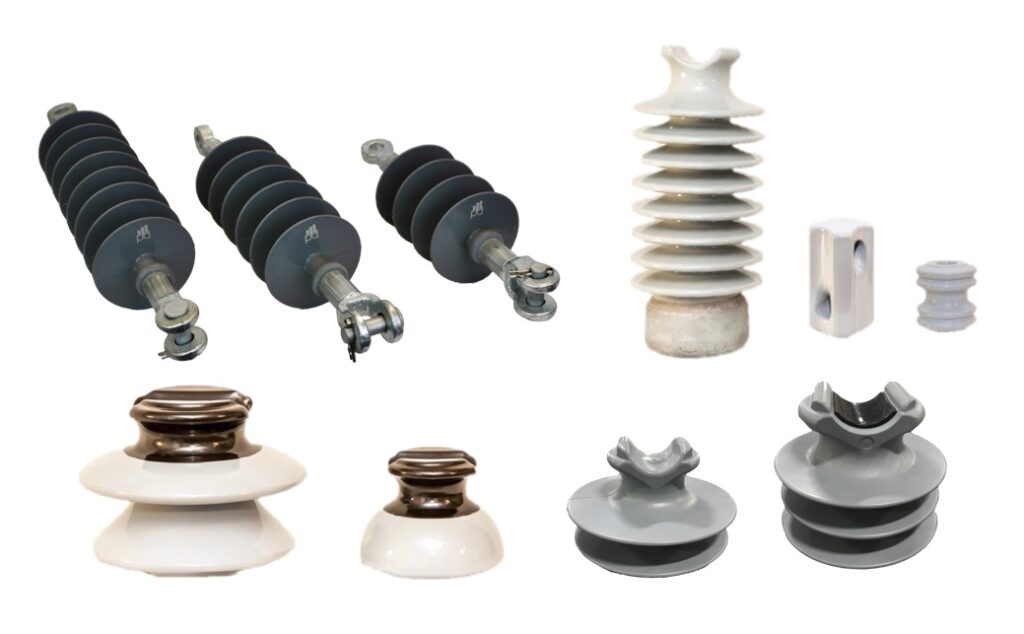
- Electrical isolation and dielectric integrity—distribution insulators maintain dielectric separation between energized conductors and grounded structures. They help prevent leakage currents and flashovers, maintain system voltage integrity, and ensure uninterrupted power supply.
- Mechanical support for conductors—insulators provide structural support for conductors, busbars, and switchgear components. The insulators help the plant withstand dynamic forces and maintain conductor alignment in compact plant layouts.
- Containment of electrical faults—distribution insulators contain faults and ensure system protection. They prevent phase-to-phase and phase-to-ground faults. Additionally, the insulators limit arc propagation in confined electrical rooms and support coordination with protective relays and circuit breakers.
- Support for redundant power systems—using the insulators enables electrical separation of redundant circuits and isolation between safety-class and non-safety-class systems.
- Thermal and fire resistance—distribution insulators must maintain structural and dielectric properties at elevated temperatures and resist fire propagation and self-extinguish.
Modernization efforts for Peru’s nuclear power infrastructure
The modification of nuclear power infrastructure in Peru is a strategic transition from research-based nuclear capability to power-generation infrastructure. The efforts combine legal form, modular reactor adoption, institutional strengthening, and grid integration. These efforts include:
- Legislative transformation of the energy framework—this introduces legal authorization for nuclear power generation and institutional coordination between energy, environment, and nuclear authorities.
- Transition to small modular reactor architecture—Peru is focusing on SMRs instead of conventional gigawatt-scale reactors. These will lead to decentralized generation, lower capital intensity, and scalability.
- Upgrading existing nuclear facilities—recent modifications include reactor power uprating and modernization and expanded capabilities in nuclear science, fuel analysis, and isotope production.
- Integration into the national energy mix—Peru is restructuring its energy infrastructure to accommodate nuclear power. This is through the expansion of transmission systems to support new generation sources and diversification away from hydropower and fossil fuels.