
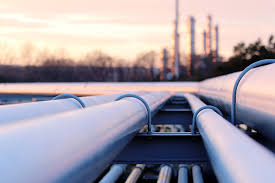
Peru’s energy and mining ministry recently published draft resolutions for natural gas distributors, Calidda and Contugas. The resolutions establish investments and promotion plans and other tariff concepts. Calidda distributors serve Lima and Callao, which called for the installation of 588 km of pipeline, 902 km of connections, and three regulation stations. Contugas’ proposal outlines the installation of 95km of pipeline and 108km of connections with an investment of $97 million. This gas infrastructure upgrade targets underserved regions and improves network redundancy. It enhances backbone connectivity and reduces pressure drops across long transmission lines. The installation of these networks should consider material selection to ensure corrosion resistance. It also should consider quality assurance controls that include weld inspection and leak detection and commissioning validation. The deadend clevis creates secure, load-bearing anchor points for dead-ending a line or supporting structure.
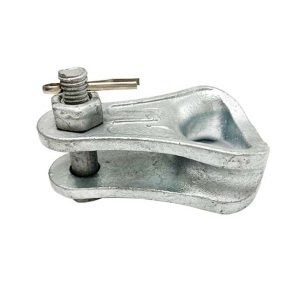
Deadend clevises attach guy wires to anchor structures to provide stability for pipeline supports, flare stacks, and metering stations against wind and seismic loads. The clevises help terminate pipe sections or cable trays at a fixed endpoint. The clevis pin design allows for controlled articulation or pivoting. This helps absorb the expansion and contraction of pipelines due to temperature changes without inducing fatigue. Deadend clevises suspend pipes from support structures to prevent sagging and maintain alignment to prevent localized stress points. The clevis helps manage dynamic loads and dampen vibration transfer from equipment to the structural supports. Most deadend clevises are from high-strength materials such as galvanized steel or stainless steel. These materials help withstand tension, corrosion, and harsh environmental conditions.
Quality assurance for deadend clevis used in gas infrastructure in Peru
Conducting quality assurance for deadend clevis is crucial for use in load-bearing and safety-critical conditions. It helps prevent failures that lead to mechanical support of supported assemblies or compromise pipeline integrity through induced stress. A deadend clevis terminates mechanical loads in support structures, bracing systems, or suspended pipeline accessories. It serves in pipeline support assemblies, valve station structural linkages, and transitional anchoring systems. Quality assurance methods include material verification through yield strength and tensile strength, chemical composition, and heat treatment condition. Failure in material verification leads to premature corrosion, embrittlement, or stress cracking. During manufacturing, QA ensures dimensional and structural integrity. The process includes forging quality checks, dimensional tolerances, and machining inspection. Other quality tests include mechanical performance testing, non-destructive testing, surface treatment, and assembly and fit verification. Quality assurance ensures each clevis meets load-bearing, durability, and safety requirements under operating conditions.
Key functions of the deadend clevis in gas infrastructure
A deadend clevis in gas infrastructure terminates, anchors, and transfers loads within support systems with pipelines and auxiliary equipment. It maintains the mechanical stability and alignment of the network. Here are the key roles of the deadend clevis in gas infrastructure.
- Load termination and anchoring—the dead-end clevis secures the end of a tensioned member of the pipeline network. It provides a fixed termination point for structural supports and prevents movement of supported structures.
- Mechanical load transfer—the clevis acts to transfer forces between connected components in the infrastructure. It distributes tensile loads from suspended elements and ensures the load is transmitted along the correct axis.
- Connection and articulation point—the clevis design provides a hinged connection that allows limited angular movement between connected parts. It also accommodates minor misalignment during installation. This articulation is crucial in gas systems where thermal expansion and contraction occur.
- Support system stabilization—the deadend clevis contributes to system rigidity and balance. It anchors guying systems, stabilizes vertical supports, and maintains spacing and elevation of pipelines.
Components of the gas infrastructure development in Peru
Gas infrastructure development in Peru spans upstream production, midstream transportation, and downstream distribution. The system moves natural gas from inland reserves to high-demand urban and industrial centers such as Lima and coastal export terminals. Common components of the infrastructure include:
- Gas extraction and processing—this includes the production phase, like gas fields, processing plants, and compression systems.
- Transmission pipeline network—this is the backbone of Peru’s gas infrastructure, including high-pressure pipelines, a transmission network, compressor stations, and block valve stations.
- Distribution networks—these are the networks that deliver gas to end users, which include distribution pipelines, secondary networks, and service connections.
- Export infrastructure—this includes liquefaction plants, export terminals, storage tanks, and marine facilities. This infrastructure helps Peru monetize excess gas production and integrate Peru into global energy markets.