

Venezuela is experiencing an energy crisis that strains the country’s infrastructure to its limits. The crisis arises from the drastic drop in hydroelectric generation capacity, representing 60% of the country’s electricity supply. The nation’s failure to supply enough fuel to thermoelectric plants exacerbates the crisis. So, this results in more extended power outages in different areas. The Guri Dam’s output decline cannot be reversed without external funding for turbine upgrades. Venezuela must, thus, foster a setting that draws in both private and public investments to boost the advancement of these technologies. This will be essential for stabilizing the power grid and minimizing power outages. The country’s grid depends on outdated transmission systems that restrict electricity production. Suspension clamps assist in preserving and enhancing power systems.
Suspension clamps help secure conductors to transmission towers and poles to prevent sagging and breakage. They maintain proper tension and alignment to help reduce line faults causing blackouts in Venezuela. Poorly supported power lines can lead to increased resistance, overheating, and energy losses. Proper installation of suspension clamps ensure optimal contact and reduce electrical resistance to improve transmission efficiency. High-quality suspension clamps absorb vibrations and mechanical stress to prevent line failures and outages. Using durable suspension clamps helps extend the lifespan of transmission lines to reduce the need for frequent repairs. Suspension clamps help stabilize new transmission lines connecting renewable sources to the grid. Proper use of suspension clamps reduces blackouts and supports Venezuela’s efforts to modernize its failing electricity infrastructure.
Suspension clamps in reducing Venezuela’s power crisis
Suspension clamps help strengthen and stabilize power line infrastructure. They enhance the reliability and longevity of overhead transmission lines. The clamps are critical for reducing power failures and improving grid reliability. A suspension clamp is a hardware component used to hold and support conductors. This is while allowing necessary movement caused by wind, temperature changes, or mechanical loads. It ensures the safe and efficient transfer of electricity. Common types include bolted, helical, armor rod, and preformed suspension clamps. Here are the roles of suspension cables in technological infrastructure reducing the power crisis in Venezuela.

- Enabling mechanical stability of power lines—suspension clamps are able to hold conductors without damage. They help reduce line sag, breakage, or misalignment to ensure uninterrupted power flow.
- Supporting high-voltage transmission efficiency—suspension clamps serve on high-voltage lines to keep conductors elevated and properly spaced. This reduces electrical losses and maintains system balance across long distances.
- Reducing maintenance downtime—proper installation of suspension clamps reduces wear and tear on conductors. This is crucial to extend infrastructure life and improve service reliability.
- Mitigating weather-related failures—suspension clamps help prevent conductor oscillation and mechanical stress. This is crucial in reducing the risk of faults or blackouts during storms or heat waves.
- Easing grid modernization projects—suspension clamps are crucial in new line construction projects. They aim to integrate renewable energy sources or improve connections in remote areas.
- Enabling emergency response and load balancing—the clamps provide strong, adaptable support that allows for emergency rerouting.
Sophisticated infrastructure to reduce power shortages and outages in Venezuela.
Venezuela faces frequent power blackouts, outdated grid systems, and political turmoil. Energy shortages disrupt residential areas, medical facilities, manufacturing sectors, and communication systems for extended periods. Nonetheless, a gradual and consistent transition is occurring towards contemporary technological infrastructure. This encompasses:
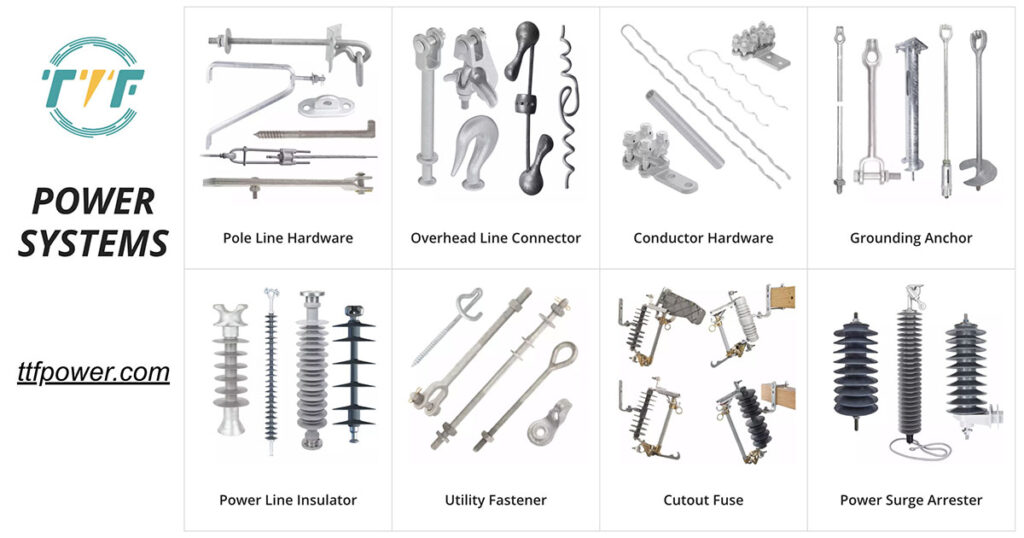
- Grid stabilization – the nation is implementing smart grid technologies enabling real-time monitoring, load distribution, and proactive maintenance. This encompasses intelligent sensors, enhanced metering systems, and automated switchgear.
- Replacing old transmission and distribution lines – outdated power lines are progressively being upgraded with high-capacity conductors, cable support bolts, and insulators to preserve line integrity. This assists in lowering the likelihood of mechanical breakdowns in distant locations.
- Decentralized energy and microgrids – the ongoing advancement of decentralized energy systems persists. This encompasses microgrids in remote regions, battery energy storage solutions for excess electricity, and solar-diesel hybrid systems.
- Integration of renewable energy – Venezuela is examining solar and wind power as viable alternatives. The main initiatives involve setting up solar panels, examining wind corridors, and collaborating with global donors to finance off-grid renewable initiatives.
- Cybersecurity infrastructure – this helps safeguard infrastructure from internal and external threats. It includes tamper-proof transformers and metering systems, surveillance and drone monitoring, and cybersecurity protocols.