
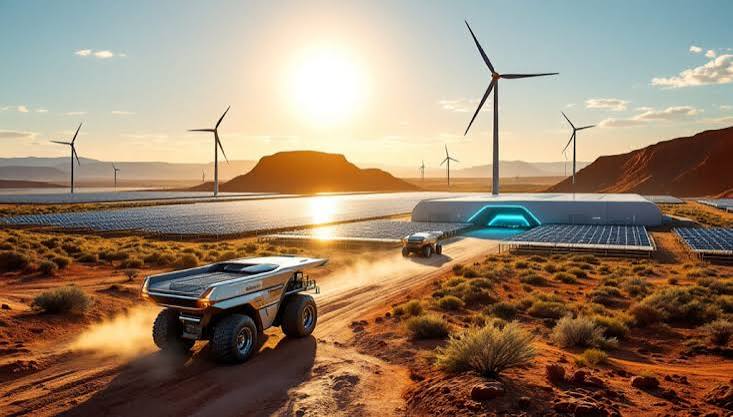
The national environmental certification service for sustainable investments (Senace) of Peru plans to give the green light with environmental criteria for a total amount of $20 billion. In this year, it plans to certify over 20 billion in projects related to mining, infrastructure, agriculture, transportation, and others. The $20 billion investment could strengthen Peru’s economic activity by supporting new infrastructure, expanding productive capacity, and creating demand for engineering, construction, energy, and other services. Peru needs to increase the flow of sustainable investments to always protect the ecosystem. Environmental certification provides a framework for ensuring that large-scale investments follow environmental requirements before projects move forward. The certification pipeline could also create opportunities throughout the electrical infrastructure supply chain. Mining projects in Peru need reliable power systems supported by insulators, connectors, span clamps, and grounding components. Span clamps support transmission conductors at intermediate towers while allowing controlled movement.
Span clamps in the electrical infrastructure hold the conductor at suspension towers. They carry the weight of the conductor span and transfer mechanical loads to the tower structure. In Peru’s transmission lines, they handle specific conductor types like AAAC. Some of the projects use specialized clamps with elastomer cushions to reduce dynamic and static stresses at the suspension point. In mining projects, span clamps handle the tensile forces from conductor weight, wind, and ice to prevent sagging. They consist of corrosion-resistant alloys like aluminum or galvanized steel to endure high UV exposure and humidity. They allow the connection of hybrid solar-wind-grid systems to remote mining operations. This helps to secure conductors and distribute mechanical loads to extend the life of transmission lines.
Quality assurance for span clamps used in Peru’s electrical infrastructure
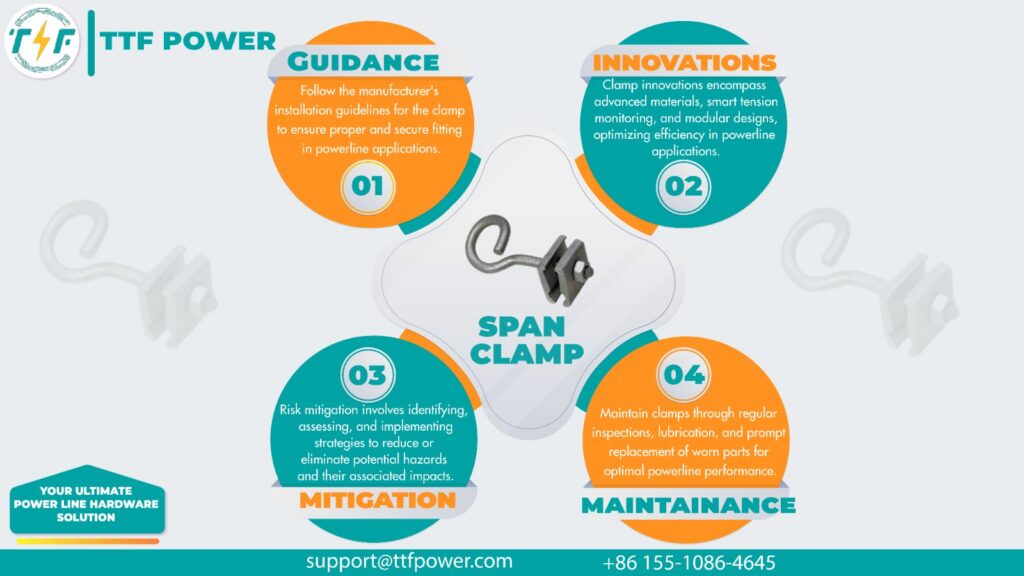
Span clamps secure and support overhead conductors where electrical lines cross between poles or structures. Their quality is crucial because electrical infrastructure serves demanding applications in mining, transportation, rural electrification, and urban power distribution. Quality assurance for the span clamps supports the mechanical integrity, reliability, safety, and service life of the entire overhead electrical network. With increasing investments in mining, transportation infrastructure, power generation, and electrification, demand for reliable hardware is also increasing. The QA process for the clamp covers material quality and mechanical strength, manufacturing accuracy, load and tensile testing, corrosion resistance, fastening quality, and electrical performance. High-quality span clamps contribute to reliable overhead power distribution, reduced conductor movement, lower maintenance needs, and improved mechanical stability of lines in mining infrastructure. Additionally, quality-assured span clamps maintain conductor positioning and mechanical stability. This reduces the likelihood of hardware-related failures that could interrupt the power supply.
The importance of span clamps in Peru’s electrical infrastructure
Span clamps support, secure, and connect conductors and cables to poles, structures, or other fittings. They are hence essential as Peru expands electrical infrastructure to support mining, transportation, industrial development, and electrification. Here are their key roles in the electrical infrastructure.
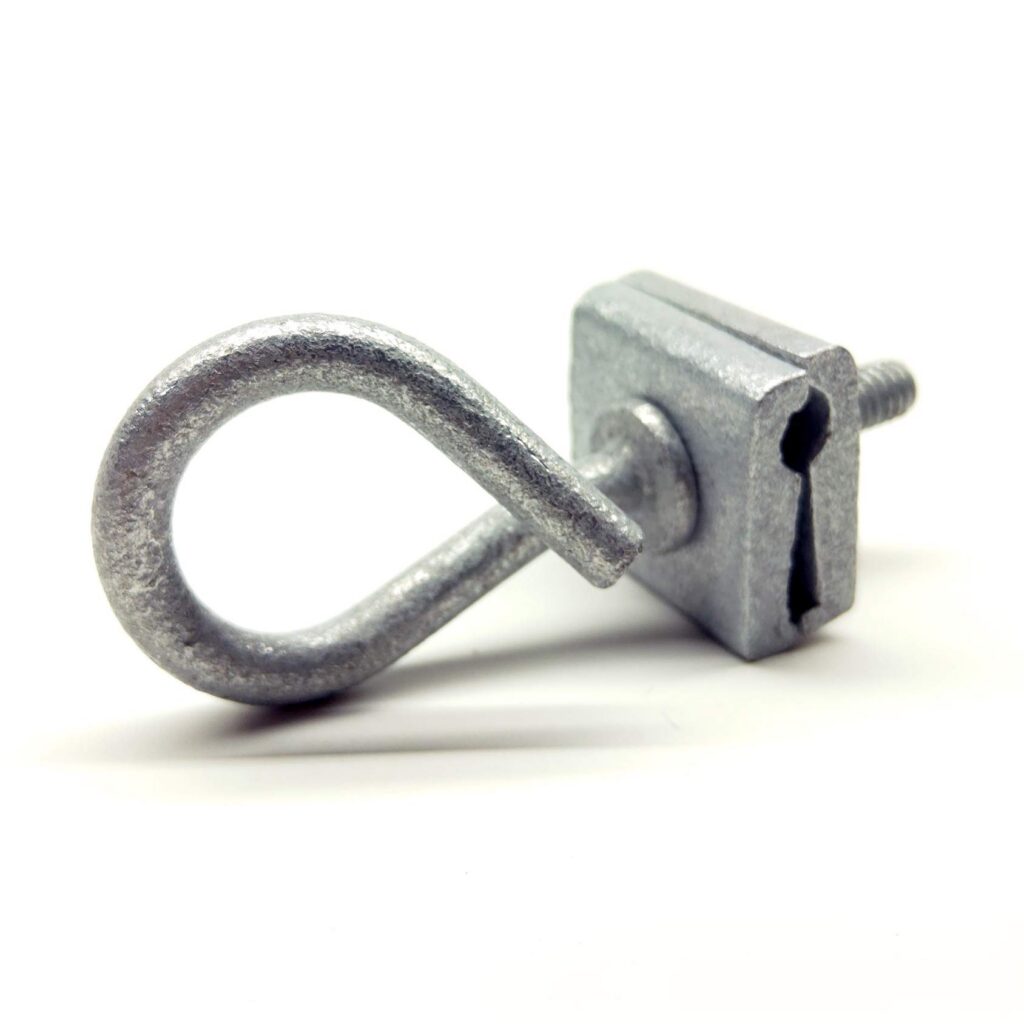
- Supporting overhead power distribution—span clamps provide a secure mechanical connection for overhead conductors. They maintain the required position of conductors between supporting structures while managing mechanical forces created by conductor tension and vibration.
- Supporting mining operations—mining in Peru demands reliable electricity for ore processing, pumping, ventilation, crushing, material handling, and automated equipment. Span clamps secure overhead conductors and maintain their integrity in these environments.
- Supporting infrastructure development—span clamps contribute to electrical networks by providing mechanical support for overhead conductors. The clamps allow standardized installation and maintenance across distribution networks.
- Applications in transportation infrastructure—this infrastructure depends on reliable electricity for rail systems, stations, ports, airports, and road infrastructure. Span clamps support these facilities by securing conductors and cables against mechanical movement.
- Supporting rural electrification—span clamps help utilities establish mechanically stable conductor spans across poles and supporting structures.
Environmental certification driving sustainable investments in Peru
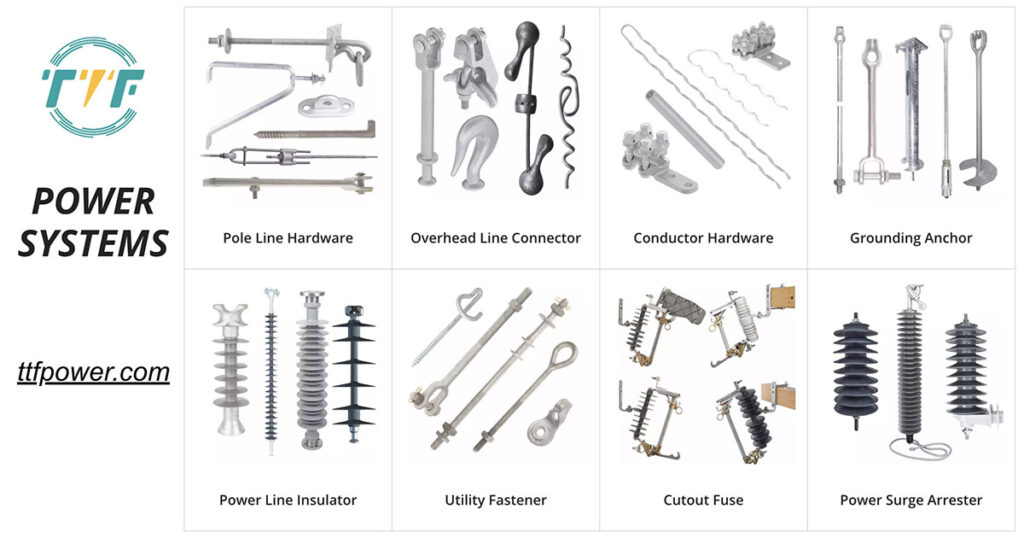
Environmental certification ensures that Peru can attract large-scale investment while managing the environmental and social impacts related to economic development. This mechanism creates a structured process for evaluating the potential of major investments. It also encourages mining companies to incorporate measures for water-resource management, waste management, biodiversity protection, and pollution prevention. It is also crucial to Peru’s expanding electricity infrastructure, including solar, wind, hydropower, natural gas, transmission, and distribution projects. Conducting environmental assessments can identify potential impacts during project planning and encourage developers to incorporate mitigation measures. This creates a patchy way for expanding electricity supply while considering ecosystem protection.