
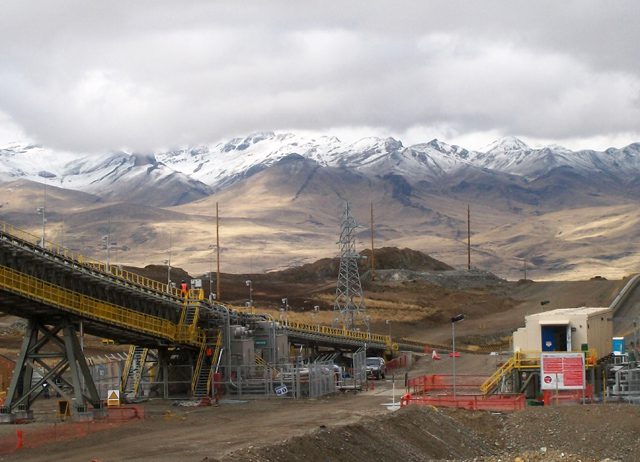
Codelco, Chile’s state-run miner, has signed an agreement with Kutch Copper Ltd, a unit of Adani Enterprises. This agreement allows both companies to examine 3 copper prospects in Chile. Chile holds some of the world’s most attractive reserves and underexplored districts. The increased demand for copper is crucial for global energy transition. It is crucial for power grids and transmission lines, electric vehicle motors, batteries, and charging systems, wind turbines and solar PV systems, data centers, and digital infrastructure. The agreement lets the companies review geological data on copper projects, assess resource potential, and explore future investment, joint development, or offtake agreements. Using hardware like service grip deadends provides mechanical termination to infrastructure supporting copper mining and exploration in Chile.
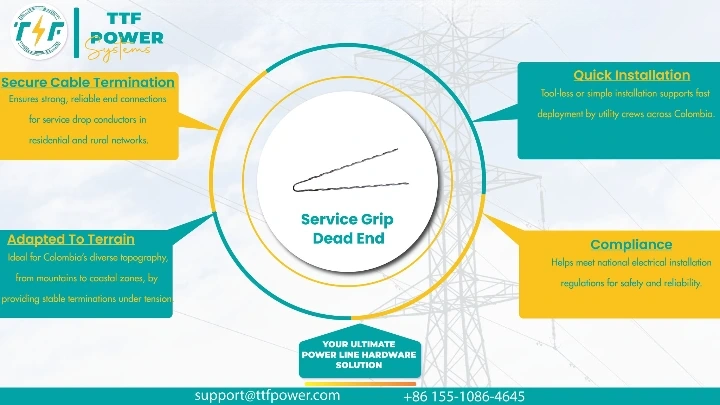
The service grip handles the physical tension of the wire caused by its own weight, wind, ice, and temperature changes. It prevents the wire from sagging or breaking, which could cause a power outage. Copper mining and exploration use energy-intensive facilities that demand high-tension power lines feeding them. These facilities depend on robust dead ends to maintain safe and reliable clearances. Service grip dead ends withstand high vibrations, dust, and corrosive chemicals.
Large open-pit mines use trolley-assist systems for their massive haul trucks. It also involves catenary systems that the trucks connect to on steep inclines. Service grip deadends are crucial for anchoring the trolley wires in these systems. This ensures constant power for the trucks and improves efficiency and reduces diesel consumption. The dead-end grip is hence essential in a massive, permanent, and high-stakes electrical ecosystem.
Copper exploration and assessment in Chile’s energy sector
The shift toward cleaner and electrified systems demands expansion and modernization of copper resources in Chile. Copper plays a crucial role in solar PV, wind turbines, EVs, batteries, smart grids, and transmission lines. Copper production provides high electrical conductivity, durability, and thermal stability, and suitability for high-voltage and low-loss power systems. This becomes crucial as Chile pushes toward utility-scale solar and wind, the green hydrogen industry, and grid modernization. Exploration and assessment involve remote sensing, 3D geological modelling, magnetotelluric surveys, and core sampling and metallurgical testing. This technology-driven exploration ensures Chile remains competitive against emerging producers in Africa and Asia. This alignment between exploration quality and energy sector sustainability strengthens Chile’s low-carbon mining identity.
Roles of service grip deadends in copper exploration technologies in Chile.
Service grip deadends ensure high-performance electrical systems used throughout copper exploration and assessment operations in Chile. The grip deadends ensure stable, safe, and reliable power delivery to geophysical instruments, drilling equipment, and temporary site infrastructure. Here are the roles of service grip deadends in copper exploration that Codelco and Kutch can adopt for exploration and assessment in Chile.
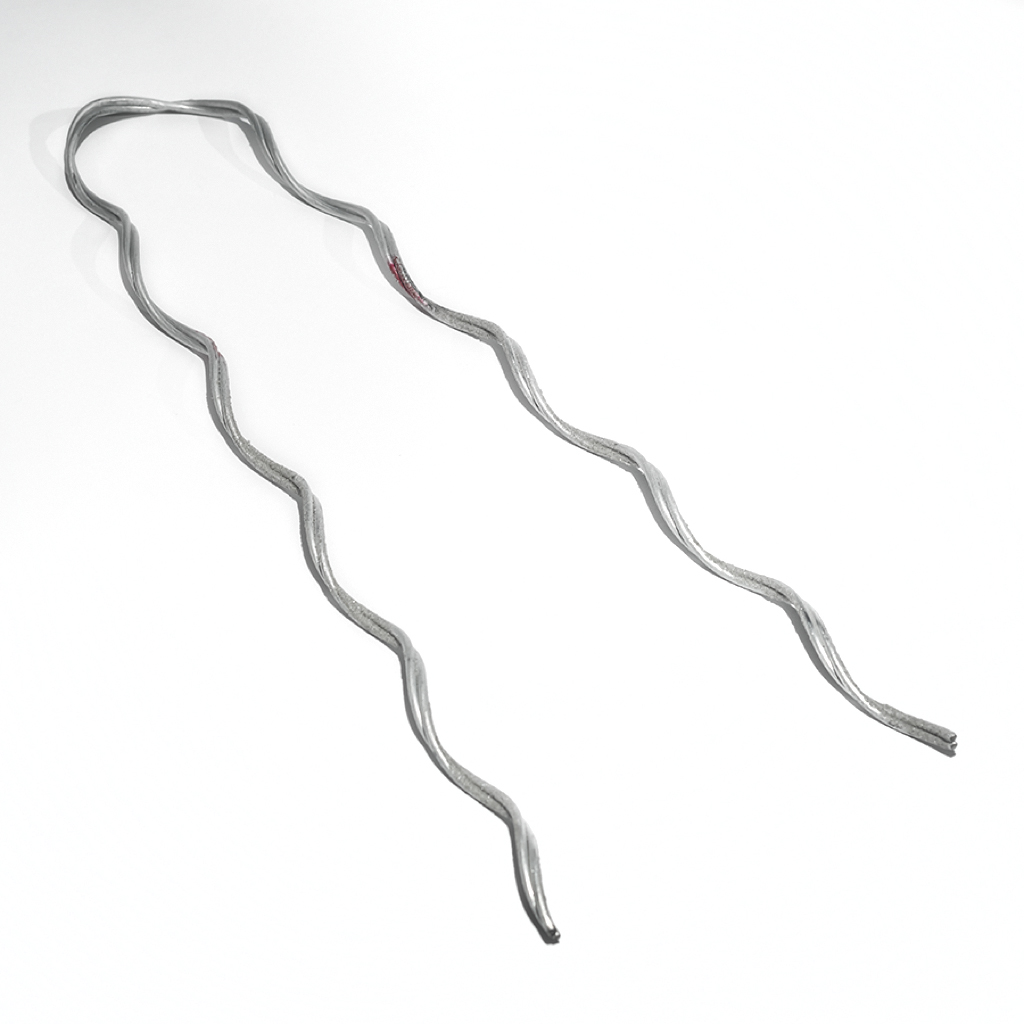
- Providing secure cable termination for field power lines—exploration sites in Chile depend on temporary overhead power lines. These energize drill rigs, core sheds, camp systems, surveying devices, and remote monitoring instruments. Service grip deadends anchors and terminates conductors at poles.
- Supporting geophysical assessment technologies—service grip deadends help maintain minimal line movement, proper tension, and secure connection points for grounding and distribution.
- Enabling rapid deployment of temporary grids—service grip deadends support deployment by allowing fast installation, reducing downtime, and ensuring consistent performance.
- Supporting renewable-powered exploration sites – service Grip deadends enable proper termination between solar arrays and distribution structures. They secure anchoring for low- and medium-voltage lines.
Exploration methods and technologies shaping Chile’s copper sector
The agreement between Codelco and Kutch depends on modern exploration methodologies and technologies to unlock new copper deposits and improve assessment accuracy. Chile must strengthen its exploration methodologies to sustain and expand production as demand for copper grows. Key methods and technologies include:
- Integration with renewable-powered exploration operations—Chile is adopting solar-powered drilling rigs, hybrid generator-battery systems, and solar microgrids for exploration camps. This reduces diesel use and lowers the carbon footprint of mining activities. Such technologies demand the use of service grip deadends for secure connections.
- Real-time data systems—these include exploration digital twins and IoT-enabled exploration equipment. The systems support better decision-making and investment planning to improve operational efficiency.
- Remote sensing for large-scale targeting—this includes high-resolution satellite imagery that supports alteration detection, lithological interpretation, and structural mapping.
- Precision drilling technologies—these include directional drilling, reverse circulation drilling optimization, and real-time downhole sensors.
- Advanced geological modelling and artificial intelligence—this use of machine learning, 3D geological modeling, and automated core logging.