

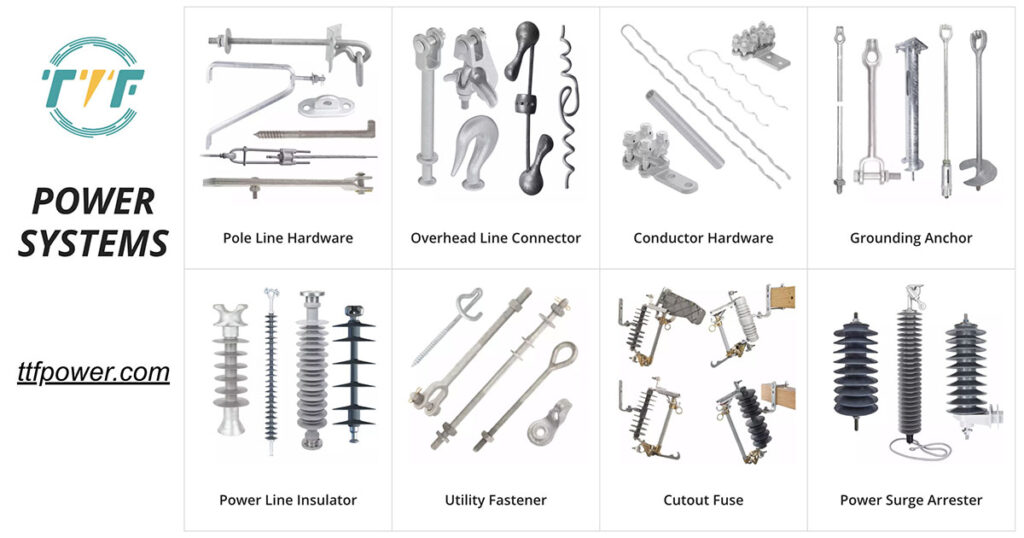
Genneia, a power generator from Argentina, has secured a CNY 358.8 million loan from the Industrial and Commercial Bank of China. Genneia will use the funds for general corporate activities associated with renewable energy initiatives. This encompasses capital expenditures, development costs, as well as operations and maintenance. The funding will ease the transfer of technology related to solar panels, wind turbines, and modernizing the grid. The funding also aids in the development and functioning of new renewable facilities and improves the grid integration of variable resources. Yuan financing promotes the use of CNY in two-way trade as Argentina imports renewable energy technology. The loan transforms Argentina’s financial and geopolitical scene by strengthening connections with China and broadening currency risk. The secondary clevis serves as an extra attachment point within the hardware assemblies that support electrical conductors and various components
A secondary clevis provides mechanical safety to wind farms, solar parks, and transmission lines. It provides a backup connection point to prevent failures. The clevis and pin carry the weight of the conductor, tension, and wind forces. The secondary clevis prevents the conductor from falling due to material fatigue, manufacturing defect, or extreme loads. This prevents power outages, damage to assets, and safety hazards. Secondary clevis assemblies function in suspension and deadend systems on towers and poles to hold insulators and conductors. On wind farms, secondary clevises function in internal collection grids, substation connections, and tower safety systems. Integrating a secondary clevis helps reduce maintenance costs and prevents failures. This is crucial to ensure the new renewable energy flows consistently.
Functions of secondary clevis in increasing renewable energy capacity in Argentina
Wind farms in Patagonia and solar parks need strong grid connections. The secondary clevis ensures safe, flexible, and durable connections in transmission infrastructure. They secure insulators, absorb stresses, and improve line reliability. They play a crucial role in delivering clean power from expanding solar and wind farms to the national grid. Here are the roles of secondary clevis in increasing renewable energy capacity in Argentina.

- Connecting insulators to hardware—the clevis acts as a link fitting between line insulators and other hardware. It ensures a secure mechanical and electrical connection. It also allows renewable-generated electricity to move from solar and wind farms into transmission lines.
- Providing flexibility in line construction—conductors must be strung across long distances in large renewable projects. The secondary clevis provides articulation between the insulator string and conductor hardware. It also reduces rigid stress points and prevents equipment damage from vibration.
- Absorbing mechanical loads—Argentina’s renewable regions face harsh conditions, including high winds, heat, and seismic activity. The secondary clevis distributes and absorbs stresses to ensure insulators and conductors remain stable.
- Enhancing grid reliability—the secondary clevis reduces the risk of mechanical failures at conductor-insulator junctions. The clevis helps maintain consistent line performance to reduce outages that could curtail renewable generation.
- Supporting cost-effective expansion—the secondary clevis lowers maintenance costs in renewable projects. They reduce the frequency of line failures and ensure efficient evacuation of power from solar and wind farms. It does this by enabling flexible and durable connections.
Initiatives strengthened by the financial increase in Argentina
Genneia’s renewable energy ventures are poised to enjoy its recent investment in Argentina. The financing bolsters the development and building of essential solar and wind facilities. This allows Genneia to increase capacity throughout Argentina. Investments create local employment, improve energy infrastructure, and foster synergies with regional economies. These are the main renewable initiatives.
- Anchoris solar park—this initiative has increased its capacity from 115 MW to 180 MW. The initiative includes 360,000 bifacial solar panels and serves major industrial customers via the Renewable Energy Term Market.
- Parque solar Malargüe (90 MW)—the investment surpasses $90 million, featuring more than 160,000 bifacial panels with solar tracking to enhance efficiency.
- San Rafael (180 MW) and San Juan Sur (130 MW) solar initiatives—these efforts seek to boost the overall solar capacity in the area to almost 800 MW by 2026.
- Elbita wind farm (162 MW)—this facility is active with 36 turbines funded by green bonds and corporate loans.
- Additional pipeline initiatives—this is a Genneia project currently being developed with the goal of securing $290 million in new investments