

More countries are preparing infrastructure for future global sports such as the FIFA World Cup. Reliable power delivery is crucial for stadiums, broadcasting centers, fan zones, and digital communication networks. The transmission infrastructure relies on resilient infrastructure and energy storage systems. Chile’s investment in battery storage systems reflects a trend toward strengthening renewable-powered electricity networks supporting growing electricity demand. However, Chile is not hosting the FIFA World Cup games. Despite this, investing in BESS leads to increased demand for power line hardware such as crossarm insulator pins.
The football games need reliable electricity for stadium lighting, VAR technologies, security systems, broadcasting equipment, and telecommunications networks. BESS helps countries modernize electricity infrastructure supporting the FIFA World Cup. This infrastructure uses crossarm insulator pins to connect BESS and renewable energy projects to the grid. They serve as the mechanical and electrical interface between the power-carrying conductors and their support structures. The pins help maintain a safe and critical distance between the live electrical conductor and the grounded pole. This prevents electrical arcing, short circuits, and power outages during power distribution. Insulator pins maintain conductor alignment and prevent sway that leads to faults.
Quality assurance for crossarm insulator pins in BESS interconnection projects in Chile

Crossarm insulator pins support overhead distribution and transmission lines connecting BESS to the grid. The pins mount insulators to crossarms, maintaining conductor clearance, mechanical stability, and electrical insulation. BESS installations deliver reliable power and respond to grid demands. The quality and performance of the insulator pin influence the safety and reliability of interconnection infrastructure. QA begins with material quality verification. The pins are mostly made from forged steel with high tensile strength to withstand conductor loads. The process also includes dimensional accuracy inspection, mechanical performance testing, thread quality inspection, and manufacturing process control.
The roles of crossarm insulator pins in BESS interconnection projects
BESS interconnection projects in Chile need robust grounding and bonding systems to ensure safe and reliable operation. Crossarm insulator pins attach insulators to crossarms and ensure conductors remain supported and insulated. They help maintain the safety, stability, and efficiency of interconnection infrastructure. Here are their key roles in BESS interconnection projects in Chile.

- Supporting overhead conductors—insulator pins provide a secure mounting point for the line insulators. They transfer the loads from conductors to the crossarm while maintaining proper conductor positioning.
- Maintaining electrical insulation—the pins support insulators that isolate energized conductors from grounded utility poles. They prevent leakage currents, prevent electrical flashovers, and improve the reliability of BESS lines.
- Ensuring mechanical stability—BESS interconnection lines face wind loads, conductor tension, thermal expansion, and seismic activity. The pins provide the strength needed to keep insulators attached to crossarms.
- Improving grid reliability – insulator pins maintain conductor alignment and insulation integrity. It also reduces the likelihood of electrical faults, conductor movement, or equipment failures.
Crossarm insulator pins play a crucial role in meeting the energy demand during the FIFA World Cup
The FIFA World Cup places demand on power systems to power stadiums, broadcast centers, electric vehicle charging, and rail networks. Crossarm insulator pins support overhead transmission and distribution networks delivering electricity to the stadium. The pins mount insulators on utility poles to maintain the reliability and safety of the power grid supporting World Cup operations. Their durability improves the dependability of electrical infrastructure before, during, and after the FIFA World Cup.
Influence of BESS projects on Chile’s power infrastructure
BESS projects are transforming Chile’s power infrastructure by addressing challenges related to rapid expansion of renewable energy generation. BESS installations help improve grid reliability, transmission efficiency, and energy security. Here is how BESS projects shape Chile’s power infrastructure.
- Enhancing grid stability —a large-scale BESS helps stabilize the power system by responding to fluctuations in generation and demand. It improves grid resilience and reduces the risk of power disturbances.
- Supporting transmission network optimization – BESS reduces congestion on transmission lines, improves transmission asset use, and delays the need for transmission upgrades.
- Renewable energy integration – the projects make renewable energy more dispatchable and reliable. This increases renewable energy penetration, supports coal plant retirement, and improves energy flexibility.
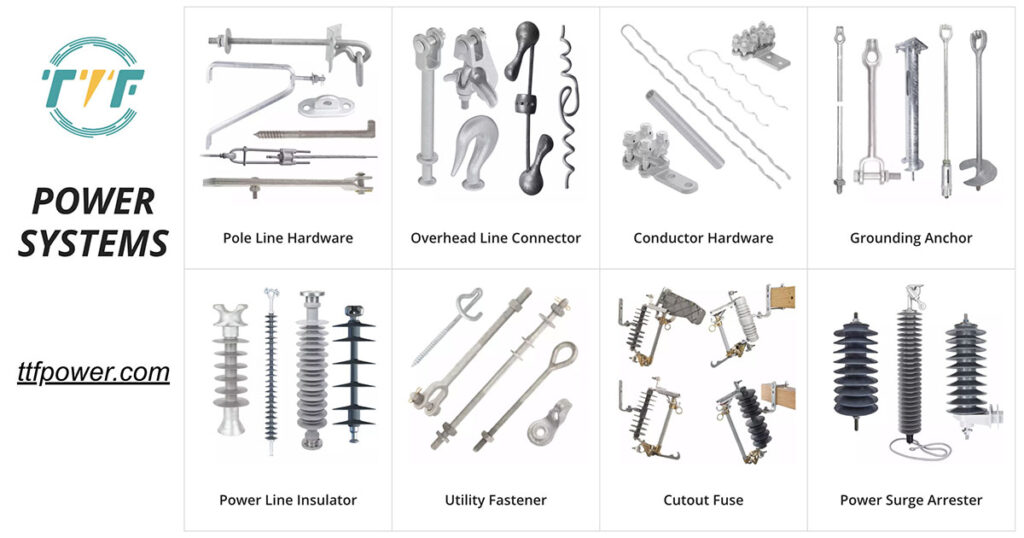
- Increasing demand for power infrastructure hardware—the development creates demand for transmission and distribution components. These include connectors and splices, crossarm insulator pins, substation hardware, lightning protection equipment, and cable accessories.