
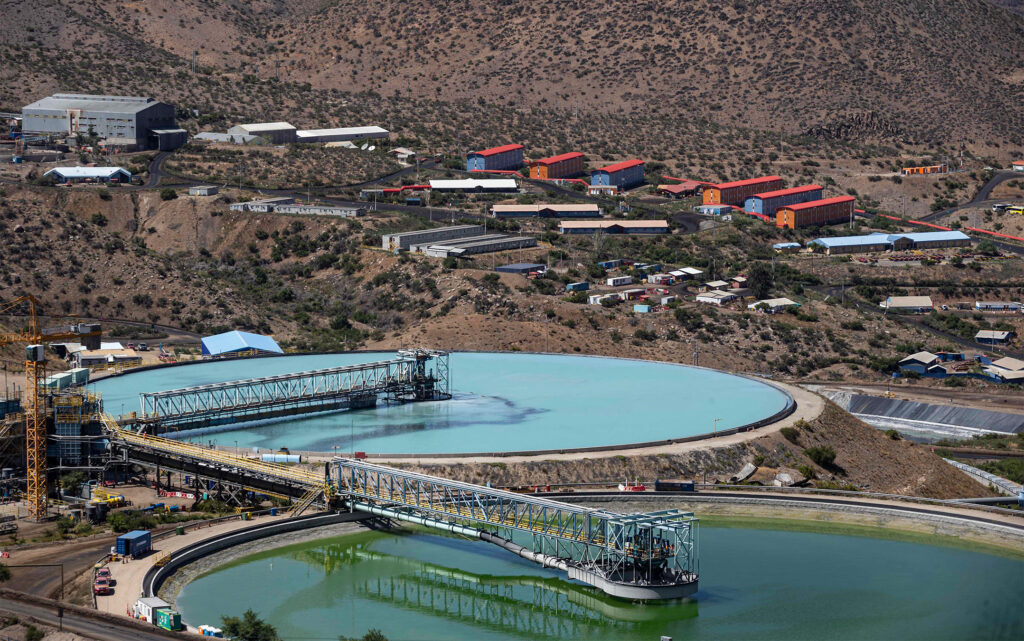
BHP and Lundin mining companies published their initial economic evaluation for the Vicuna project located in Argentina. It has the capacity to generate over 500,000 tonnes of copper annually. The initiative includes the Josemaria deposit located in San Juan Province and the Filo del Sol deposit situated in the Antofagasta Region. Expected costs of $18.1 billion throughout the three development phases and $30.3 billion over its entire life cycle will impact Chile’s energy industry. Extensive copper and gold mining activities need significant energy for crushing and grinding, flotation and processing, as well as water pumping and desalination. This will enhance long-term power purchase agreements, speed up the addition of new generation capacity, and bolster transmission infrastructure linking distant mining areas to generation centers. Distant high-altitude mining activities need high-voltage transmission lines, substations, and reactive power support systems. These connections depend on compression deadends for stability
Compression deadends secure and terminate electrical conductors. They ensure a safe, reliable, and uninterrupted power supply. They ensure safety for remote exploration camps to large-scale mining operations. The dead ends secure the termination of overhead power lines for remote camps and drill rigs. They support renewable-powered exploration such as solar arrays. Compression deadends anchor high-tension lines for processing plants, haulage systems, and ventilation. They are also crucial for trolley-assist systems on haul trucks. The dead ends offer termination in primary substations, leaching pads, and pumping stations for grid interconnection of renewables like solar and wind.
Quality assurance for compression deadends for use in Chile’s mining sector
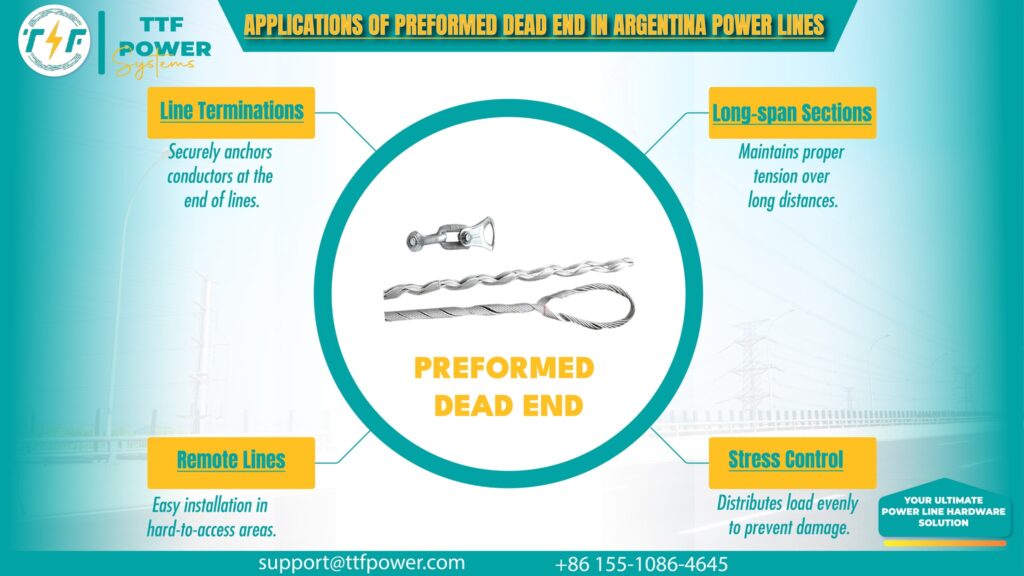
Compression deadends ensure the structural integrity of overhead conductors and utility lines. Mining infrastructure must handle extreme loads, seismic activity, and demanding service conditions. Ensuring the quality of compression deadends ensures safety, uptime, and regulatory compliance. The quality assurance for the dead ends starts with material test reports, heat treatment verification, and chemical composition analysis. The dead-end design must match conductor size, tensile load requirements, and environmental conditions. During manufacturing, the compression dead ends undergo controlled compression tooling, torque calibration, and in-process inspections. Common tests during validation include ultimate tensile strength tests, slip tests at rated load levels, and cycle fatigue tests. Quality assurance ensures the best material selection for mining sites facing extreme temperature and vibration conditions.
Functions of compression deadends in Chile’s mining infrastructure
Compression deadends are high-strength conductor termination fittings designed to anchor and secure overhead conductors under tensile load. Compression deadends ensure mechanical stability, electrical reliability, and infrastructure performance. Its key functions are as discussed below.
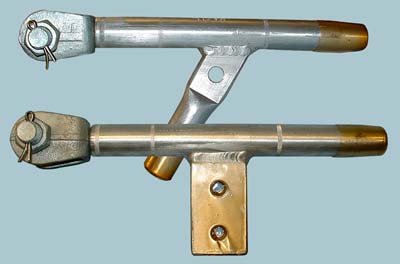
- Conductor anchorage and load transfer—compression deadends anchor conductors at terminal structures and transfer tensile loads to towers. The dead ends withstand full-rated conductor tensile strength, maintain mechanical integrity, and prevent conductor creep.
- Electrical continuity and conductivity—compression dead ends maintain low-resistance electrical continuity at termination points. The dead ends reduce contact resistance, reduce localized heating, and support stable power delivery to crushers and pumping systems.
- Performance under extreme environmental conditions—mining operations face high UV exposure, diurnal temperature variation, and corrosive dust and saline conditions. Compression dead ends resist corrosion, maintain compression integrity, and avoid galvanic corrosion between conductor and fitting materials.
- Termination at substations and switching yards—compression deadends terminate incoming overhead conductors, connect to busbars, and secure jumpers and downleads. The secure termination prevents electrical arcing and mechanical failure at critical nodes.
The significance of copper and gold minerals in Chile’s shift to renewable energy
Copper in Chile is essential for electrification, expanding the grid, renewable energy systems, and ensuring financial stability. Gold strengthens economic stability and supports high-performance electronic systems. Chile’s metal resources establish it as a key mineral exporter and an important player in the transition to clean energy. Essential functions consist of:
- Electrification—copper plays an essential role in solar PV systems, wind turbines, battery energy storage systems, and high-voltage substations and switchgear. It is equally important in transformers, grounding systems, high-voltage transmission cables, and components of smart grids.
- Green hydrogen—copper is also utilized in electrolyzers, rectifiers, and energy systems within hydrogen facilities. The increase in transmission infrastructure for large-scale electrolysis also boosts the demand for copper.
- Financial stability and high-reliability applications—income generated from gold extraction and copper sustains mining royalties and foreign currency earnings. This supports financing for renewable energy incentives, expansion of transmission, modernization of the grid, and electrification initiatives.
- Reducing carbon emissions in copper and gold production—electric vehicle manufacturers and renewable energy equipment providers need low-carbon copper to cut embedded emissions.