
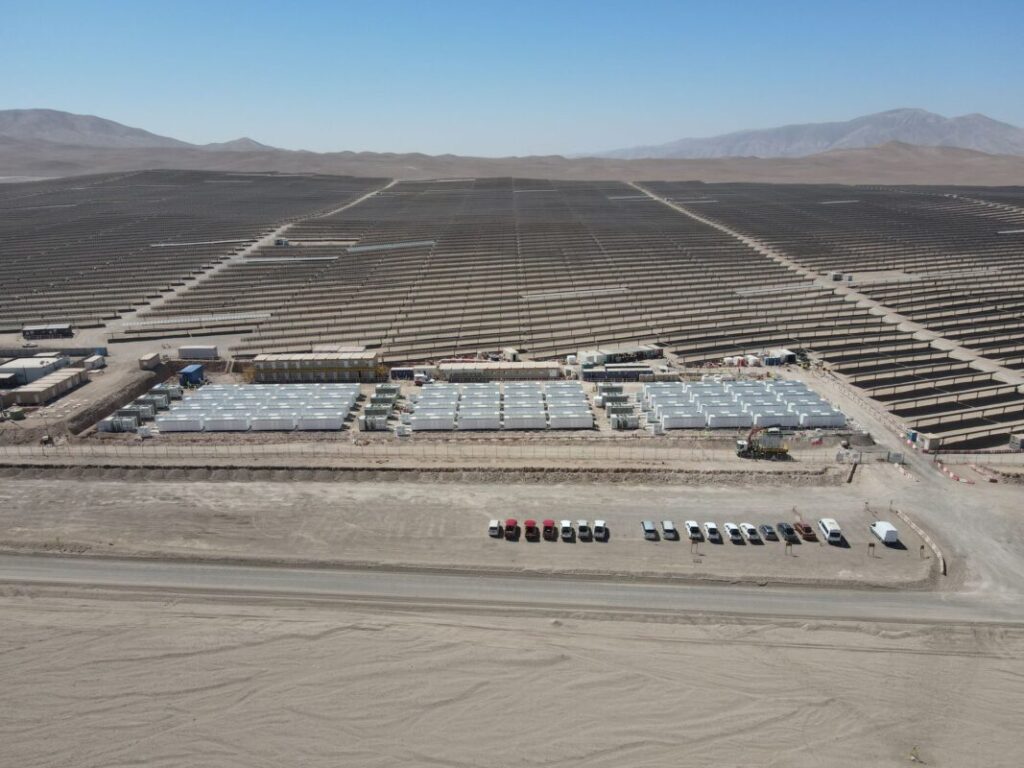
Engie, a French company, has started operations at its 142 MW/802 MWh battery energy storage system Lile project in Chile. The project was built in a former thermal power plant in Antofagasta and represented a US$174 million investment. These developments are crucial to Chile’s solar generation potential in the Atacama Desert, creating opportunities to provide electricity during the day and store surplus energy for lower solar output. The developments also increase demand for reliable transmission infrastructure, electrical connections, grounding systems, and power line hardware. Additionally, the Spanish independent power producer Grenergy has secured US$457 million in non-recourse senior financing for a Chilean portfolio combining 446 MW of solar power with battery storage. The expansion of battery storage and solar generation leads to increased demand for reliable electrical infrastructure. Using stay rods in the infrastructure provides stability and prevents movement to ensure the safety of battery modules.
Stay rods connect and brace different structural elements such as rack posts or container walls. They help to stiffen the structure and prevent movement between components to maintain the integrity of the BESS during operation and transportation. The rods secure battery modules within their racks. They act as fixing rods that clamp the battery packs in place. This helps prevent excessive shaking due to vibration or impact during transport. Some stay rods use elastic rings on the rods to provide a cushioning effect and reduce vibrations. Stay rods consist of strong materials that help withstand the weight of battery modules and the dynamic forces encountered during transport and operation.
Quality assurance for stay rods used in BESS facilities for Chile’s renewable energy sector
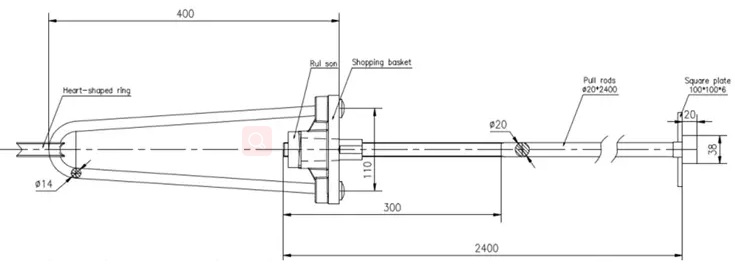
Conducting quality assurance for stay rods helps maintain the structural stability and operational reliability of BESS facilities in Chile. The increasing investments in utility-scale battery storage and solar-plus-storage projects demand support structures for overhead electrical connections, distribution lines, and substation equipment. Stay rods serve in guiding and anchoring assemblies to stabilize poles, support structures, and other installations against mechanical forces. Quality assurance verifies that stay rods meet the required material, dimensional, mechanical, and corrosion-resistance requirements. The QA process covers material quality, dimensional accuracy, tensile strength, corrosion protection, and standard compliance. During installation, QA checks foundation and anchor verification, correct assembly, alignment and tensioning, and fastener security. Effective QA for the stay rods ensures stability, reduced maintenance costs, improved worker safety, and reliable grid connections. QA helps support reliable electrical infrastructure and reliable connections between battery storage facilities, solar generation assets, and the power grid.
Relevance of stay rods in BESS facilities for Chile’s renewable energy
Battery energy storage systems are critical for Chile’s renewable energy transition as more companies invest in the sector. The infrastructure depends on stay rods to support and stabilize poles and other supported structures. They support overhead power lines, distribution poles, and other electrical infrastructure. Their roles in the BESS facilities include:
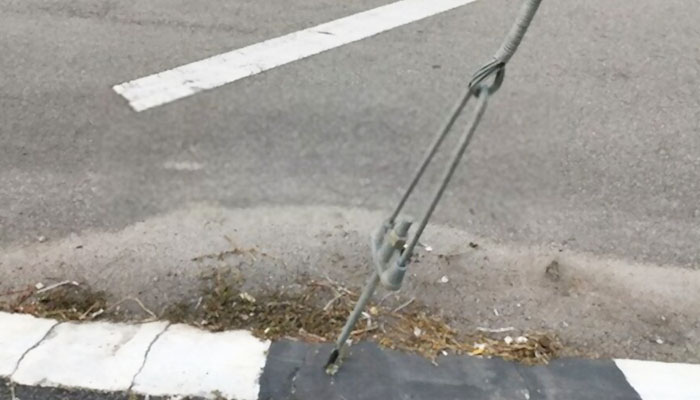
- Providing structural stability for electrical infrastructure—stay rods anchor guy wire assemblies that stabilize utility poles. They form part of the electrical distribution and transmission infrastructure serving battery storage facilities. Stay rods maintain the intended position and alignment of guyed poles and support the stability of overhead electrical connections serving BESS installations.
- Supporting reliable grid connections—BESS facilities connect to electrical networks through substations, transformers, switchgear, and transmission lines. Stay rods contribute to the mechanical reliability of the overhead structures used in these connections.
- Resisting wind and other environmental loads—the rods contribute to the anchoring systems designed to resist mechanical loads caused by wind, conductor tension, and other forces. Their performance depends on steel strength, tensile capacity, and foundation design.
- Supporting expansion of solar-plus-storage projects—the use of the stay rods depends on the electrical layout and structural design. They secure and stabilize guyed utility poles and overhead distribution lines.
Engie’s Lile project strengthens Chile’s grid flexibility.
Engie’s Lile BESS project has the ability to store electricity and dispatch it when the grid needs it. The 142 MW of power capacity and 802 MWh of storage capacity allows it to discharge electricity for up to five hours. Battery dispatch depends on electricity prices, grid requirements, charging availability, and operating instructions. The BESS project connects to Chile’s National Electric System. Its dispatchable power can help system operators respond to charging supply-demand conditions. The facility contributes to balancing supply and demand, managing renewable variability, supporting peak periods, and diversifying flexibility resources. It contributes to frequency regulation, voltage support, and other services.