
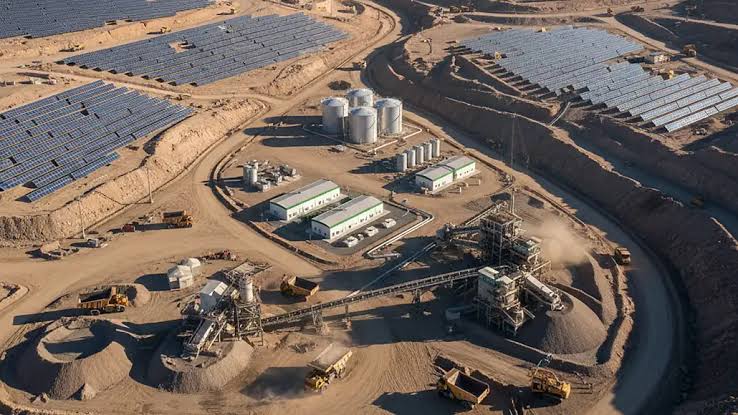
Peru is pushing for the acceleration of mining investment and electricity infrastructure. The prime minister, Luis Galarreta, told Congress that the government expects to authorize 240 mining projects in 2026. These projects will cover exploration, exploitation, and beneficiation concessions. The industry also expects the six generation projects to enter operation by July 2027, adding 1,096 MW of installed capacity. This authorization represents an attempt to reduce administrative delays and create a more predictable environment for mining investors. The expansion could stimulate investment in exploration, extraction, mineral processing, transportation, pumping, ventilation, and electrification. It will also push for the expansion and integration of power transmission networks and hardware, including composite post insulators. The infrastructure will help supply power for crushers, mills, conveyors, pumps, processing plants, ventilation systems, and water treatment. Additionally, the government also plans to complement generation expansion with extra transmission projects.
Composite post insulators provide electrical insulation and support the live equipment in the harsh conditions in Peru. In the mining and power generation infrastructure, the insulators support busbars in power plants and substations. They protect circuit breakers, disconnectors, transformers, and reactors. They provide rigid structural support and electrical isolation for equipment within the plant. Composite post insulators support power distribution equipment in high-voltage networks. They ensure safe and reliable power delivery in demanding environments with space constraints and high vibration. The insulators have a silicone rubber housing that helps repel water and prevent the formation of a conductive film. This reduces leakage currents and prevents pollution flashovers in the mining areas. This also offers high mechanical strength and resistance to vandalism and breakage from impact or vibration.
The role of quality assurance for composite post insulators used in mining and power generation
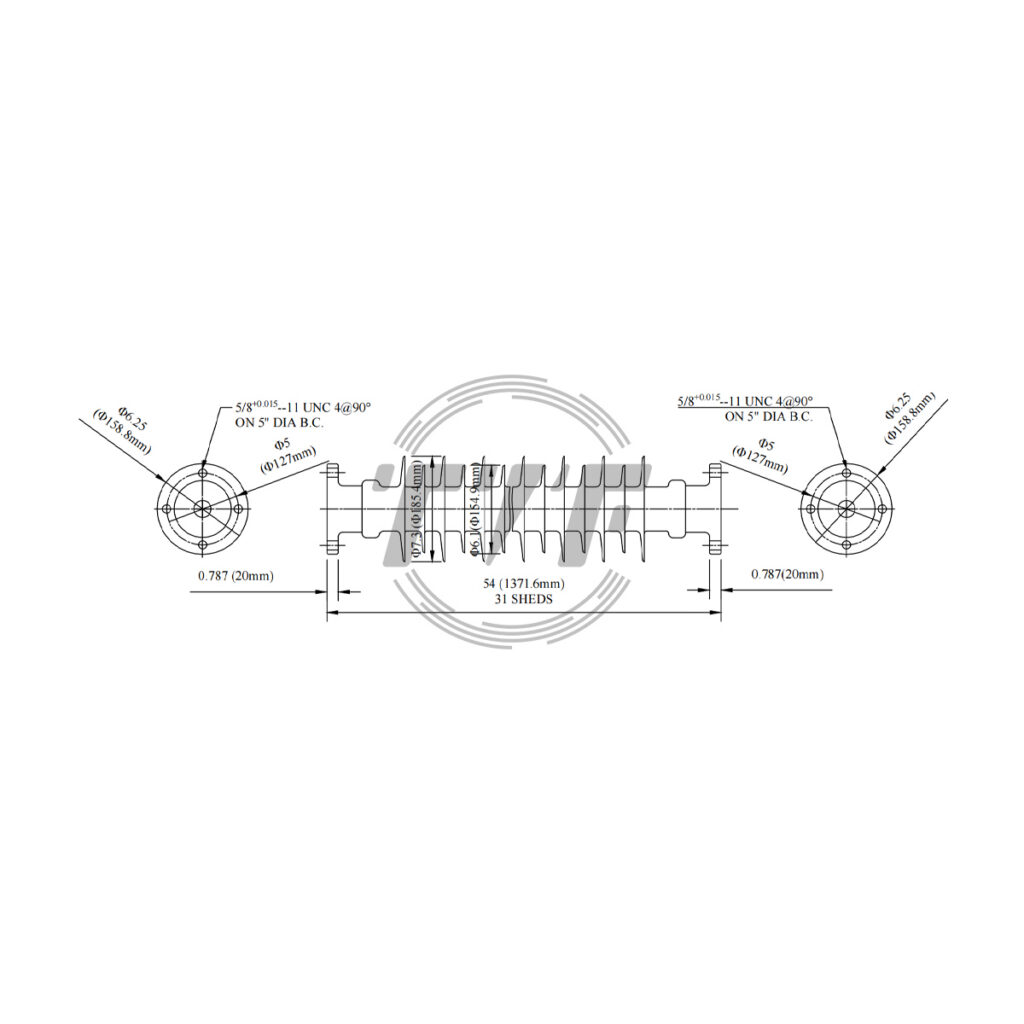
Quality assurance for composite post insulators helps them provide electrical insulation and mechanical support for conductors, busbars, and substation equipment. QA prevents defects that may cause flashovers, equipment damage, forced outages, and safety risks. Quality-assured insulators can operate in salt-laden coastal environments and high-altitude Andean mining regions. QA confirms power-frequency withstand voltage, lightning impulse withstand voltage, creepage distance, electrical clearances, insulation resistance, and housing integrity. It prevents failures that can interrupt power to crushers, mills, pumps, conveyors, ventilation systems, and mineral-processing equipment. QA also controls mechanical performance, improves performance at high altitudes, prevents moisture ingress, and helps increase the reliability of power-generation substations. Quality assurance focuses on mechanical strength, electrical withstand capability, polymer housing quality, core integrity, interface bonding, environmental bonding, and dimensional accuracy. It ensures the composite post insulators remain reliable under Peru’s mining operating conditions.
Significance of composite post insulators in Peru’s mining and power generation infrastructure
Composite post insulators help expand mining, transmission, and power-generation infrastructure. They provide electrical insulation while supporting busbars, conductors, and high-voltage equipment in substations and overhead systems. Here is the importance of composite post insulators in the infrastructure.
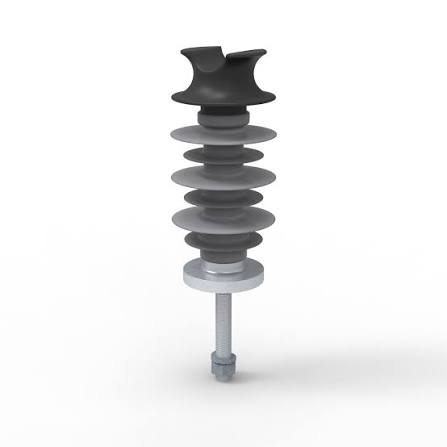
- Reliable electrical insulation – the insulator helps maintain electrical separation between energized conductors and grounded structures. They prevent flashovers, leakage currents, short circuits, and equipment damage.
- Supporting high-altitude mining substations—the insulators have materials that withstand high altitudes that affect insulation levels, electrical clearances, support post insulators, and surge arresters.
- Resistance to demanding environmental conditions – the mining environment in Peru exposes the equipment to salt and industrial pollution. Composite insulators can withstand intense UV radiation, heavy rainfall, lightning activity, and large temperature variations.
- Maintaining mechanical support – the insulators support busbars and electrical equipment while withstanding mechanical forces.
- Improving substation reliability – composite insulators contribute to the reliability of substations by providing an insulated support for energized components.
Roles of investments in mining and power generation infrastructure in Peru’s energy sector
Investments in mining and power generation will help develop new mines, processing facilities, and industrial projects. Peru’s mining investment portfolio contains 66 projects representing an estimated US $64.075 billion in potential investment. Here is how investments support the industry.
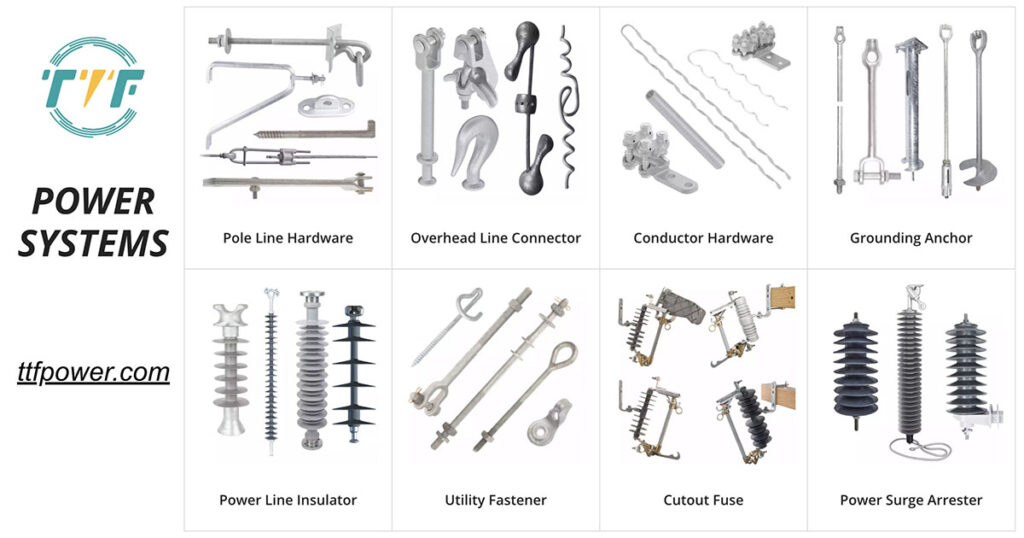
- Increasing electricity demand – investments create demand for generation capacity, transmission lines, substations, transformers, and grid protection systems.
- Expanding generation capacity – new generation projects can increase available electricity supply, improve system adequacy, and support new industrial connections.
- Strengthening transmission infrastructure—generation investment allows electricity transportation from power plants to mines, industrial facilities, and other demand centers.
- Supporting electrification and decarbonization—investment in power generation gives Peru an opportunity to increase the role of renewable energy in its electricity system. Solar and wind generation complement hydropower and thermal generation.