
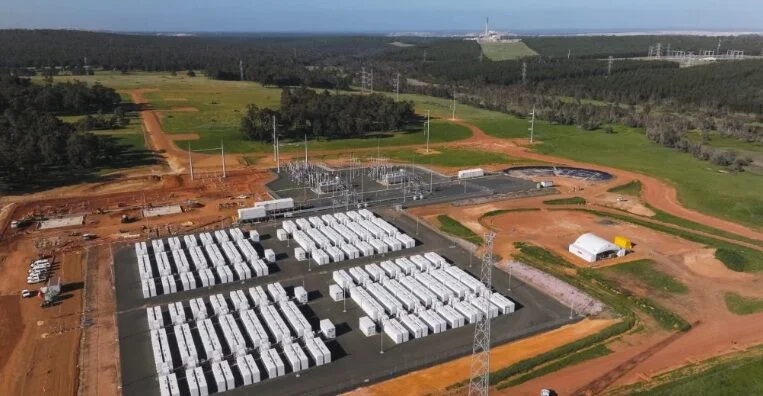
Argentina’s Buenos Aires province plans to invest 31 billion in giant batteries to stop blackouts. The project will consist of a 25 MW/125 MWh battery energy storage system. This project will help address reliability challenges in the region. The province is deploying energy storage at selected locations where the grid experiences stress during demand peaks. During these demand periods, substations and transmission lines become overloaded. BESS will provide and supply electricity exactly where and when it is needed to avoid long grid expansion procedures. BESS also enhances the integration of renewable energy sources. This is by storing excess solar generation, shifting renewable energy into evening demand periods, smoothing fluctuations in renewable output, and reducing renewable energy curtailment. These projects rely on robust hardware such as double clamp brackets to fasten terminals of energy storage components such as batteries and capacitors.
Double clamp brackets fasten two cables, conduits, grounding conductors, busbars, or structural members to support frames, mounting rails, poles, or equipment enclosures. They have a dual-clamping configuration that provides more stability than single-clamp designs. The clamps act as a direct electrical connection between BESS components to allow current to flow from one terminal to another. The clamp reduces the need for separate busbars and lowers the module’s electrical resistance. Double clamp brackets are also designed to create a connection point for voltage monitoring or charge-balancing circuits. The clamp secures battery modules in place and establishes a reliable electrical connection for power and signal transmission. Additionally, in BESS systems, they serve in electrical support structures, grounding assemblies, inverter stations, transformer yards, and auxiliary equipment installations.
Quality assurance for double clamp brackets in BESS projects
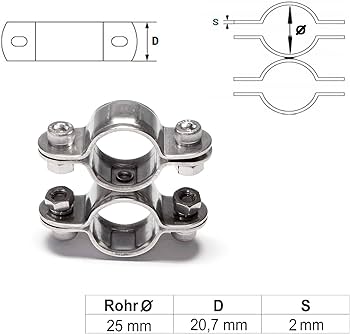
BESS projects rely on reliable mechanical and electrical infrastructure to ensure safe and efficient operation. Double clamp brackets secure cables, conduits, busbars, mounting rails, grounding conductors, and auxiliary equipment. They ensure structural stability and maintain proper alignment. Conducting quality assurance for the clamps helps ensure each bracket meets design specifications, applicable industry standards, and project requirements. QA for double clamp brackets involves systematic processes that verify materials, manufacturing methods, dimensional accuracy, protective coatings, and mechanical performance. High-quality brackets contribute to the reliability of BESS installations by preventing premature failures that could compromise safety. Quality assurance ensures every bracket delivers consistent mechanical strength, corrosion resistance, precise fitment, and long term durability under demanding operating conditions.
Functions of the double clamp brackets in BESS projects in Argentina
Argentina is expanding its capacity for battery energy storage to strengthen grid reliability, integrate renewable energy, and address transmission constraints. Double clamp brackets perform critical structural and cable management functions that ensure the safe and efficient operation of BESS facilities. Double clamp brackets are from hot-dip galvanized steel, stainless steel, or corrosion-resistant aluminum alloys. These materials ensure their durability in demanding environmental conditions. Here are their key roles in BESS projects.
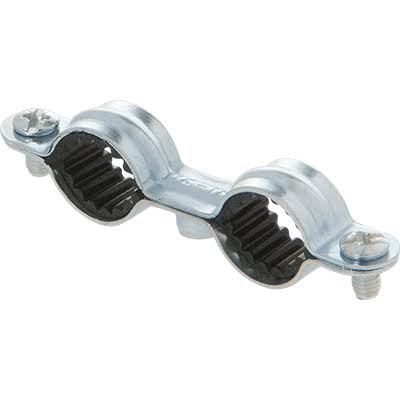
- Secure cable management – double-clamp brackets organize and secure power, communication, and fiber-optic cables. They prevent movement caused by vibration or thermal expansion.
- Supporting high-power electrical infrastructure – the clamps provide stable support for heavy-duty conductors, cable trays, conduits, and busbar systems.
- Maintaining mechanical stability – the brackets distribute loads across support structures to help prevent loosening, deformation, or structural fatigue.
- Protecting grounding systems—double clamp brackets hold grounding conductors in position. They ensure the grounding network remains intact throughout the operational life.
- Simplifying installation – the clamps reduce the number of individual fittings needed during construction. They help improve installation efficiency, cable routing consistency, and construction timelines.
BESS reducing blackouts in Argentina
Argentina is investing in battery energy storage systems to improve the reliability of its electricity network as renewable energy capacity expands. BESS projects provide a fast and flexible solution by storing electricity when supply exceeds demand. Here is how BESS helps reduce blackouts in Argentina.
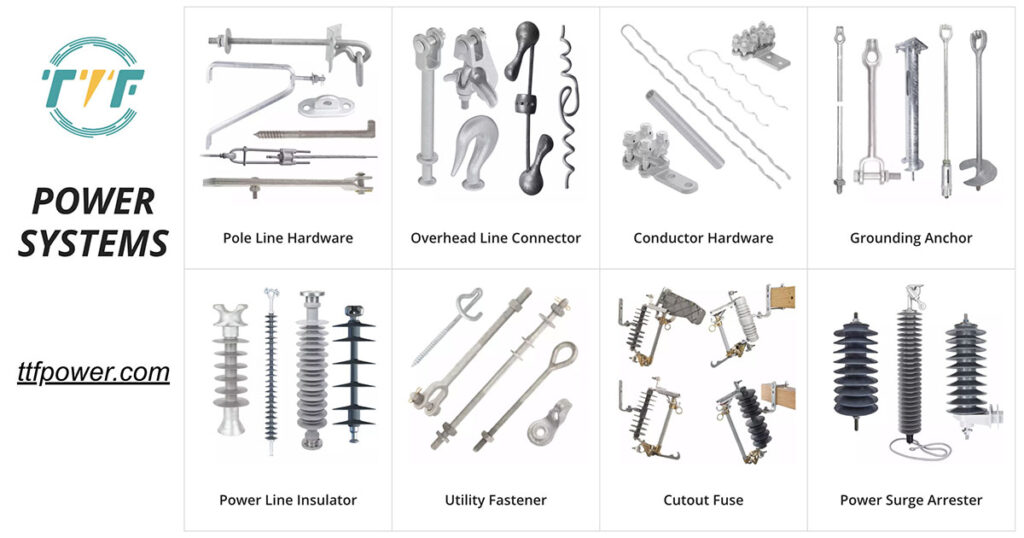
- Addressing peak electricity demand—BESS reduces demand stresses by discharging stored electricity during high demands and reducing loads on substations and transformers.
- Relieving transmission congestion – BESS does this by storing excess electricity near renewable generation sites and improving grid flexibility.
- Stabilizing grid frequency—the projects respond to blackouts by injecting power when frequency drops, providing fast frequency regulation, and supporting grid stability.
- Reliable renewable energy integration—BESS improves the integration by storing excess solar generation, capturing surplus wind energy, and delivering stored electricity.