

Argentina’s distributed solar capacity increased from 118.6 MW at the close of 2025 to 159.5 MW in June. The nation increased its distributed generation capacity by 40.9 MW in the initial half of 2026. This increase demonstrates the expanding importance of distributed renewable energy such as solar PV systems. Distributed generation lessens reliance on centralized power facilities and diminishes strain on transmission and distribution systems. Distributed generation can enhance utility-scale solar and wind capacity by diversifying the electricity supply and allowing consumers to actively engage in the energy market. This progress also establishes new technical demands for Argentina’s electricity networks. It generates a need for dependable infrastructure comprising distribution transformers, protection and control devices, surge protectors, grid connection components, and deadend clamps. These clamps provide a durable and secure connection for the power lines transporting electricity from solar panels.
High-quality deadend clamps grip the conductor and hold it under high mechanical tensions at poles. They distribute the load along the conductor to prevent slippage and damage. Helical deadend clamps anchor wires in solar farms to the ground and the structure. This ensures the panels stay upright under lateral and uplift forces. These clamps prevent lateral movement and keep the solar array stable under wind, snow, or seismic loads. Deadend clamps create more reliable electrical bonding paths to the solar farm infrastructure.
Quality assurance for deadend clamps in Argentina’s distributed solar generation

Quality assurance for deadend clamps helps them secure and end conductors at critical points across solar farms, distribution lines, and grid interconnections. The deadend clamp must withstand mechanical tension, environmental exposure, electrical loads, and operational stresses. It helps prevent conductor slippage and connection failure. Conducting quality assurance for the clamps helps maintain mechanical stability, electrical continuity, network safety, and solar generation reliability. QA helps detect defects that can cause conductor movement, line outages, equipment damage, costly maintenance, and safety risks for personnel. The process covers material and manufacturing quality, mechanical and tensile testing, contact performance, corrosion testing, and dimensional quality. Effective quality assurance reduces failure risks, improves asset longevity, supports predictable maintenance, and ensures solar infrastructure can deliver stable electricity.
The importance of deadend clamps in the distributed solar generation infrastructure
Deadend clamps secure conductors at termination points in distributed solar generation infrastructure. Solar PV systems connecting to distribution networks need reliable conductor termination for maintaining structural stability, electrical continuity, and network performance. Here are the functions of the deadend clamp in the solar infrastructure in Argentina.
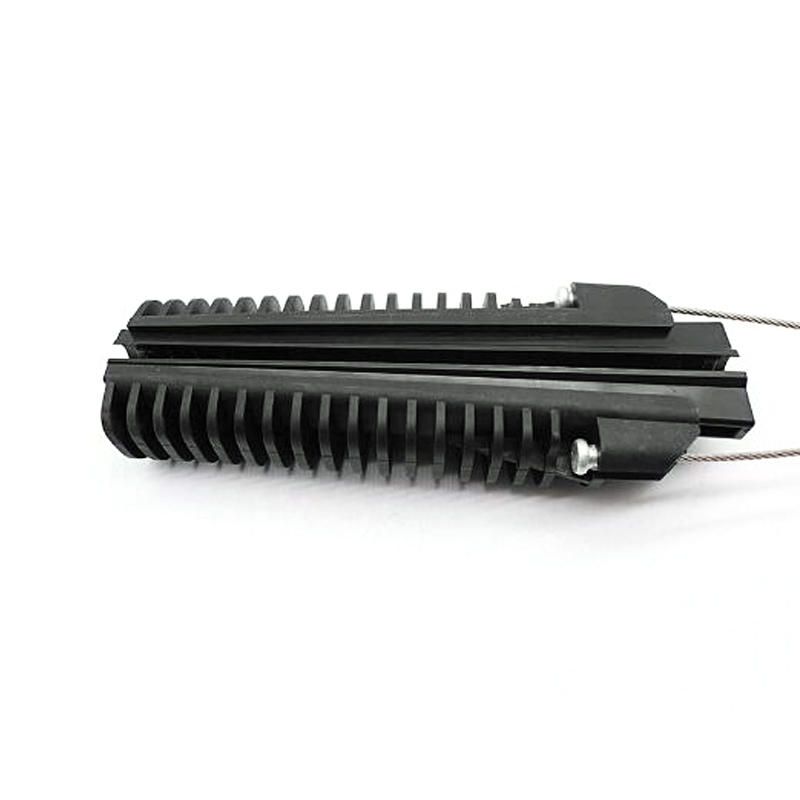
- Securing conductors at termination points—the deadend clamp grips and secures a conductor where the line terminates. The clamp prevents the conductor from slipping under mechanical tension.
- Transferring mechanical loads—deadend clamps transfer mechanical forces to supporting structures. They help reduce excessive stress on the conductor and the connected equipment.
- Maintaining conductor tension—the clamps maintain the needed tension at termination points. They prevent excessive sag that could compromise safety with infrastructure.
- Supporting electrical continuity—the clamp helps maintain a reliable electrical path between the conductor and connected equipment. The secure connection reduces the risk of increased contact resistance, localized heating, and electrical losses.
- Supporting changes in line direction and configuration—deadend clamps can withstand mechanical forces in solar operations. This makes them suitable for various configurations within solar distribution networks.
Effects of enhanced distributed generation capability on grid infrastructure
The swift growth of distributed generation in Argentina is altering the technical requirements of its power grid. Grid integration assists in managing bidirectional power flows, fluctuating renewable energy generation, evolving protection requirements, and the increasing number of energy consumers. Significant implications consist of the following:
- Heightened stress on distribution networks – elevated amounts of distributed generation may impose requirements on local distribution systems. The necessity for upgrades depends on the concentration and scale of distributed generation setups.
- Bidirectional power flows arise when solar installations generate more electricity than what consumers need, leading to distributed generation. This introduces new technical difficulties related to reverse power flow, voltage increase, and transformer functioning.
- Updating protection systems—distributed generators may add to fault current that influences the functioning of traditional protection systems. Enhancing protection systems assists in addressing islanding risks, altered fault-current levels, and reverse fault-current flows.
- Growth of smart grid technologies—this growth facilitates the installation of smart meters, remote monitoring systems, automated switches, and digital substations.