
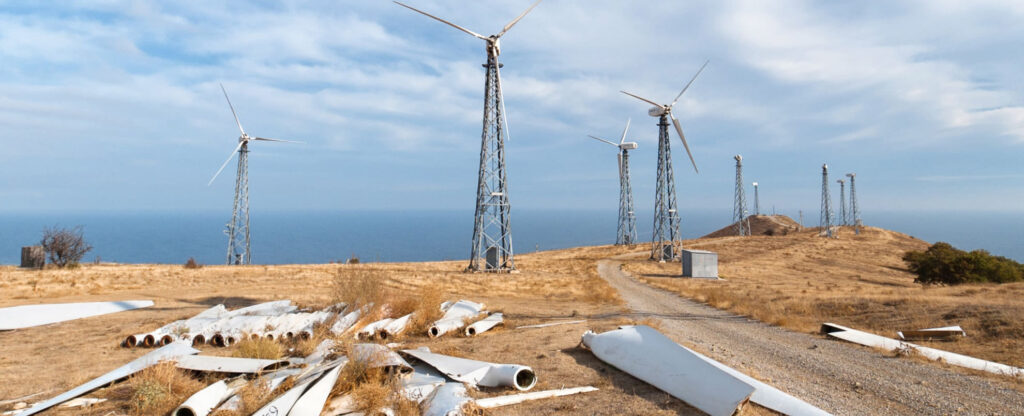
Vestas is deepening its presence in Argentina with 3GW in operation and 350MW wind power under construction. The quality of the wind resource enables higher efficiency levels than in other markets. The installed wind turbines feature 162-meter rotors and capacities ranging between 6 MW and 6.5 MW that allow maximized wind capture and optimized electricity generation. Growth is also reflected in concrete projects under execution, such as the Olavarria wind farm, which will add 186 MW of installed capacity through 29 EnVentus V162 turbines rated at 6.4 MW each. Additionally, the expansion of the Mataco wind farm will add an extra 31 MW, reaching a total capacity of 270.4 MW. Scaling of wind energy enables improved load balancing and dispatch optimization, lower levelized costs of energy, and stronger negotiating leverage with suppliers and regulators. The development will need the use of robust power line hardware such as double end bolts.
Fastening bolts connect components that must withstand immense dynamic loads and harsh environmental conditions. Double end bolts offer secure, reliable, and fatigue-resistant connections. The bolts anchor the tower base to the concrete foundation where one bolt embeds in the concrete while the other protrudes to secure the base. The bolts connect the flanges of cylindrical steel tower sections together to form the full tower height. They deliver high preload and even load distribution for a secure, rigid connection capable of handling wind-induced bending moments. Double end bolts bolt the composite rotor blades to the main hub, where the bolt engages with a threaded insert embedded in the blade root. It provides fatigue resistance under dynamic bending loads.
Quality assurance for double end bolts used in wind farm infrastructure
Conducting quality assurance for double end bolts in wind farm infrastructure prevents joint loosening, misalignment, or structural compromise. The fasteners serve in flange joints, nacelle assemblies, and foundation interfaces that experience cyclic loading, vibration, and environmental exposure. Quality assurance for the bolts begins with mill certification, heat lot traceability, and inclusion control. QA also conducts manufacturing process control, corrosion resistance, performance testing, and preload control. During manufacturing, the double-ended bolts undergo thread rolling, heat treatment validation, and dimensional inspection to ensure fatigue resistance. During installation, the bolt undergoes torque-tension calibration, use of tensioning tools, lubrication control, and bolt-tightening sequences. Double end bolts undergo inspection and non-destructive testing, in-service monitoring and maintenance, and standards and compliance frameworks.
Functions of the double end bolts in Argentina’s wind farm infrastructure
Double end bolts in wind farm infrastructure offer structural and mechanical solutions. Their threaded design allows them to function as high-reliability fastening elements in components facing cyclic loading, vibration, and environmental stress. Double end bolts ensure structural cohesion, load transfer, and reliability of turbines. Here are the common roles of double end bolts in Argentina’s wind farms.
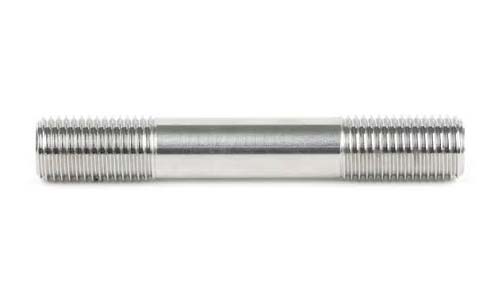
- Structural joint integrity in tower sections—double end bolts provide uniform clamping force, maintain axial alignment, and resist fatigue-induced loosening through consistent preload distribution.
- Load transfer and distribution – the bolts transmit tensile, shear, and bending forces between connected components. They also distribute stress across connection points to reduce localized overstress.
- Nacelle and hub assembly fixing—double end bolts secure gearbox housings, generator mounts, and bearing assemblies. Their dual thread ensures that components remain stable under rotational forces and vibration.
- Fatigue resistance in high-wind environments—the bolts withstand load cycles without crack initiation and maintain preload under vibration and thermal expansion.
Technologies supporting Vesta’s wind power development in Argentina
The development of Vestas wind energy relies on the integration of turbine engineering, digital optimization, grid adaptation, and lifecycle service systems. These technologies include:
- Advanced turbine platforms—this includes high-efficiency turbine platforms such as the EnVentus platform and earlier platforms.
- Smart data and digital optimization systems—this includes SCADA-based monitoring systems, predictive analytics and AI-driven diagnostics, and wind resource modeling and forecasting tools.
- Active output management systems – this tech provides performance optimization, adjusts turbine operation to maximize output, and integrates maintenance scheduling with production targets.
- Grid integration and power electronics—Vestas technologies offer full-scale converter systems, reactive power and voltage support capabilities, and hybrid compatibility.
- Modular and site-adaptive engineering – Vestas ensures turbines can be configured for different wind classes, blade design and tower height are optimized per location, and logistics and transport solutions are adapted to Argentina’s infrastructure constraints.