
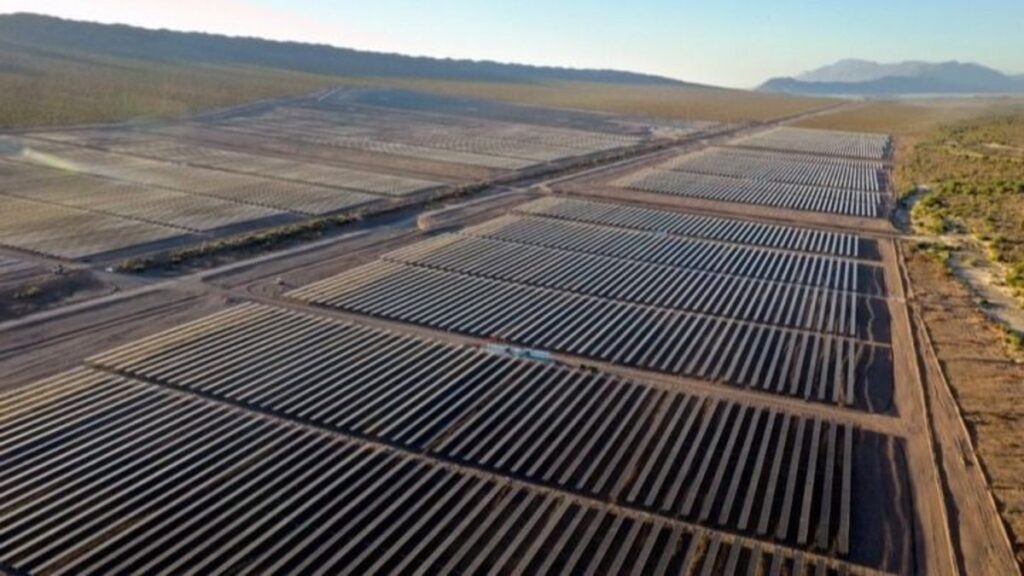
Arauco Solar Park in Argentina marked its operational start with a key construction milestone. The project completed its first full row of solar panels and launched operational assembly works that will guide construction of Argentina’s largest wind and solar hybrid complex. The project involves the installation of the first complete row of photovoltaic PV modules. It also enables on-site verification of the correct execution of all key elements of the solar tracking systems. The construction process includes module mounting, direct current electrical connections, grounding systems, quality controls, and compliance with safety requirements. After completion, Arauco will feature more than 1,600 solar trackers and 94,000 PV panels, with an installed capacity of 50 MW. The project will also incorporate technologies including leveling works, road construction, solar tracking components, and expansion of the transformer substation. These connections use advanced components such as flat square washers.
Flat square washers serve under bolt heads and nuts on the solar module mounting structures. Their surface area distributes the clamping force over a wider area of the thin racking profiles. The washers prevent pull-through and deformation to ensure long-term alignment and stability of the entire array. Flat square washers ensure a secure and stable connection that can withstand thermal expansion and contraction. They ensure reliable metal-to-metal contact for the equipment grounding conductor connections. This provides a high-pressure contact surface to maintain a low-resistance path to ground for fault currents.
Technical specifications for the flat square washers supporting solar parks
Flat square washers are specified to ensure load distribution, joint stability, and long-term durability. They are crucial for mechanical connections facing wind, thermal cycling, and vibration. The washers influence structural reliability, installation consistency, and lifecycle maintenance costs. They help reduce the risk of joint loosening, material deformation, and premature corrosion. The specifications include corrosion protection, mechanical properties to sustain stresses, dimensional requirements, and material specifications. Key materials for the flat square washers include carbon steel, stainless steel, or hot-dip galvanized steel. Flat square washers are integral components to the structural integrity of solar PV infrastructure.
Functions of the flat square washers in solar park development in Argentina
Flat square washers provide mechanical and protective functions in the development of utility-scale solar parks in Argentina. They ensure the structural reliability, construction quality, and long-term asset performance. Flat square washers serve in module mounting and rail connections, tracker systems’ structural joints, push-to-purlin and purlin-to-rail interfaces, and grounding and earthing connections. Here are the key functions of the flat square washers in solar PV installations.
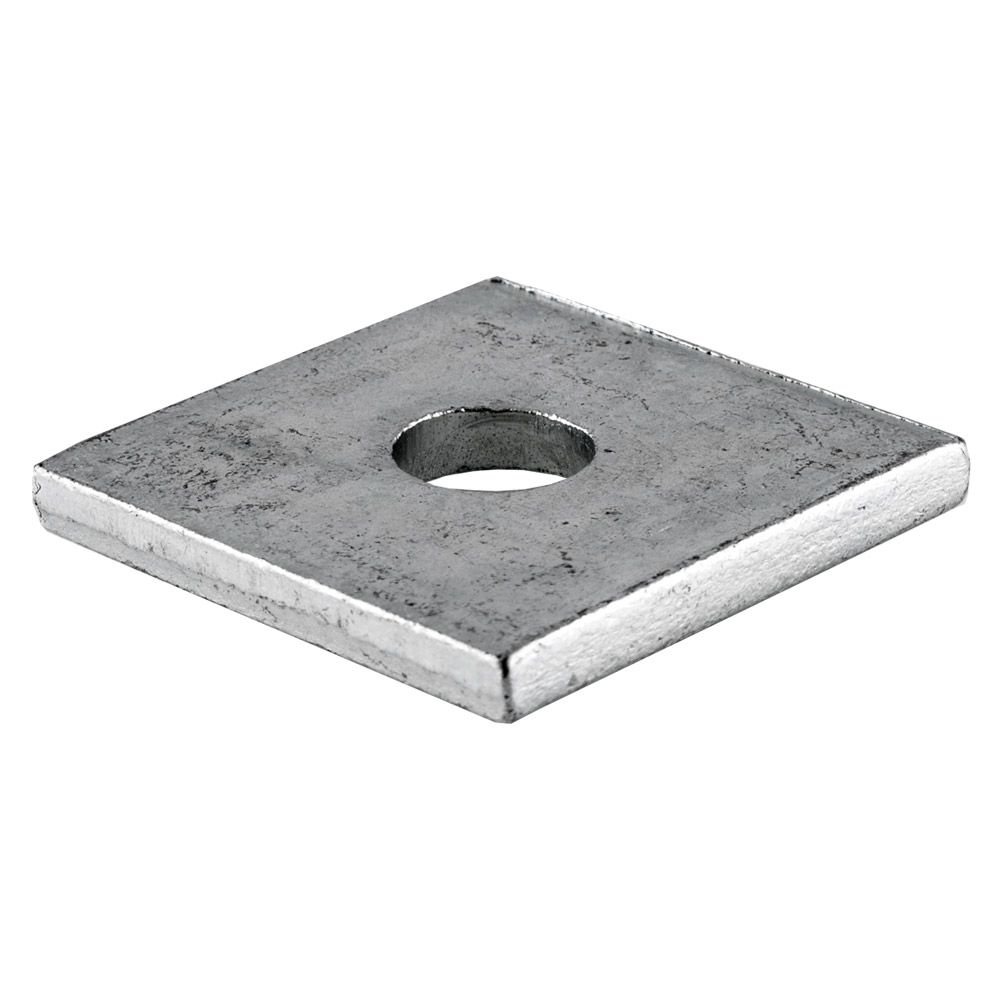
- Load distribution and structural protection—mounting structures in Argentina’s solar park combine galvanized steel posts with aluminum rails or thin-gauge purlins. Square washers reduce localized stress at bolt interfaces. They also prevent indentation, tearing, and deformation of the components.
- Joint stability—flat square washers improve joint stability by maintaining uniform contact between the bolt head and the structural member. They help preserve bolt preload and reduce the risk of loosening. The loesening may be from vibration, wind-induced oscillation, or tracker movement in single-axis tracking systems.
- Compensation for installation tolerances—flat square washers help absorb minor surface irregularities and alignment tolerances in steel sections and concrete-embedded anchors.
- Corrosion barrier and lifecycle durability—stainless steel washers reduce direct contact between dissimilar metals and reduce galvanic corrosion at bolted joints.
Technologies supporting Arauco solar park development in Argentina
There are several technologies supporting Arauco solar park development. The technologies ensure efficient construction, reliable operation, and integration with existing renewable energy assets in the Arauco complex. These technological systems reinforce long-term performance and operational resilience. They also contribute to Argentina’s renewable energy transition. These technologies include:
- PV generation and smart power electronics—the PV generation system includes high-efficiency modules and advanced inverters. These increase annual energy yield and improve reliability for utility-scale generation and contracted duties.
- Digital monitoring and construction technology—Arauco’s construction phase integrates advanced digital monitoring ecosystems. This includes real-time construction monitoring, remote supervision, and data standards. These reduce risk, enhance project transparency, and allow compliance with technical standards.
- Grid integration and substation enhancements—Arauco is expanding its transformer station with a new 60 MVA module. This steps up the voltage for efficient transmission into the national grid. It also ensures stable grid interfacing for wind and solar outputs.
- Hybridization with wind assets—the hybrid design of the Arauco complex involves system-level integration. It also involves complementary resource management and operational coordination systems. These systems reduce variability and improve use of transmission infrastructure.