
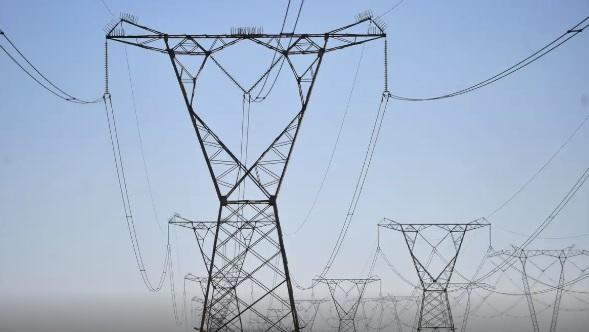
Bolivia and Brazil are adopting efforts to integrate the power grids of South America better to reduce emissions and increase energy security. The power grid connects Argentina, Uruguay, Paraguay, and Venezuela. Bolivia integrating with Brazil allows the countries to access Bolivia’s growing renewable energy capacity. This eases the two-way electricity trade to ensure surplus energy in one country supports shortages in another. The integration also promotes regional energy stability. It also enhances South America’s energy interdependence to reduce reliance on fossil fuels and support decarbonization efforts. Using line surge arresters in the grid infrastructure ensures grid stability, reliability, and long-distance interconnection.
Surge arresters are installed directly on transmission line towers in parallel with the insulators. They prevent flashovers across the insulator caused by lightning strikes, switching operations, or other overvoltage events. The interconnection needs extensive remote transmission corridors that face lightning. This includes new higher voltage lines such as 500 kV. By reducing the lightning-caused outages, the line surge arresters ensure that the interconnection lines are available and operational. Surge arresters prevent dangerous overvoltages from reaching the sensitive substation equipment.
Bolivia is central to projects like SIEPAC (Central American Interconnection Systems) and the IIRSA (Initiative for the Integration of Regional Infrastructure in South America) lines. The success is dependent on the reliability of the grid and its cross-border links. A robust internal grid is necessary to bring that power to cities and industries. Line surge arresters ensure availability of critical interconnection lines, reduce the cost of building high-voltage lines, increase stability, and safeguard financial investments in key interconnection assets.
Importance of grid interconnection among South American countries
Grid interconnection in Bolivia and other South American countries plays a crucial role in the region’s energy landscape. Interconnected power systems provide a way forward for decarbonization, energy security, and regional cooperation. The interconnection strengthens energy security by enabling countries to share resources across borders. The Bolivia-Brazil interconnection provides opportunities for renewable energy development, including hydropower and wind farm development. An interconnected grid makes it easier to balance supply and demand by transferring renewable energy from regions with surpluses to those with deficits. Bolivia’s integration with larger networks can provide access to cheaper and more reliable energy. This stimulates industrial growth and rural electrification. Line surge arresters protect the infrastructure used for grid upgrades.
The uses of line surge arresters in grid interconnection among South American countries
Using line surge arresters in the grid infrastructure ensures the stability, reliability, and protection of transmission systems. This makes them indispensable components in the cross-border power ties to support renewable energy trade and grid reliability. The arresters safeguard high-voltage infrastructure against lightning strikes, switching surges, and transient overvoltages. Here are the functions of the line surge arresters in grid interconnection infrastructure.
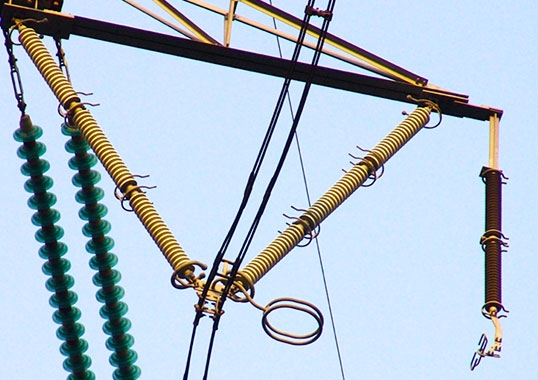
- Protecting cross-border transmission lines—line surge arresters in the 500 kV and 230 kV lines reduce outage rates and maintain continuous power exchange with Brazil and Argentina.
- Enhancing grid reliability and interconnection stability—the arresters help localize and absorb transient surges. This prevents the surges from spreading to interconnected systems. They ensure voltage balance and insulation coordination between the connected countries’ power networks.
- Supporting renewable energy integration—hydropower, solar, and wind energy power Bolivia’s grid interconnection. Using line surge arresters helps mitigate surge risks by absorbing switching transients when power plants connect or disconnect from the grid.
- Smart and modernized grids—modern surge arresters can have sensors and monitoring systems that track surge events, leakage current, and arrester health. The data support predictive maintenance and ensure critical cross-border infrastructure remains operational.
The benefits of Bolivia-Brazil’s grid interconnection
Bolivia’s grid interconnection with Brazil shows a significant step towards energy security, sustainability, and economic integration. Bolivia strengthens its own energy resilience and contributes to the creation of a unified South American energy market. Key benefits include:
- Strengthening regional energy security—energy interconnection improves stability and reliability. The shared transmission allows Bolivia to import power during periods of shortage or droughts.
- Economic growth and energy trade opportunities—cross-border electricity trade offers electricity sales. This attracts foreign investment into transmission and renewable projects.
- Enhancing infrastructure development—interconnected grids lead to infrastructure growth. It brings the development of transmission lines, substations, and converter stations.
- Improving grid reliability and system efficiency—interconnection increases operational flexibility and efficiency in power transmission. The shared systems can optimize generation dispatch and ensure the most efficient plants operate first.