
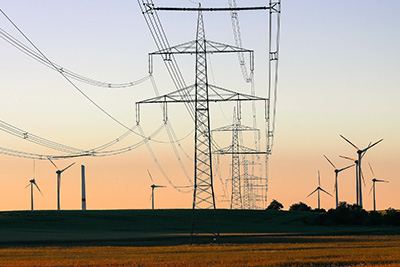
In September, Bolivia achieved the highest generation of wind energy, generating 56.6 GWh. The country has four wind power plants operated by the national Electricity Company, including the Qollpana wind farm in Cochabamba and the Warnes, San Julian, and El Dorado wind farms in Santa Cruz. The Santa Cruz wind farms contribute to 108 MW capacity combined together. Increased wind power generation could help address the rising fuel crisis in Bolivia. Various constraints limiting its deployment include altitude effects, infrastructure barriers, environmental issues, and economic and financial feasibility. Spiral vibration dampers protect the overhead electrical lines carrying power from the wind farm to the grid.
The use of these dampers prevents the premature failure of the conductors to ensure a reliable energy supply and reduce long-term maintenance costs. When wind blows across a cylindrical object like a power line, the damper creates vortices from the top and bottom of the wire. The vortex shedding causes the wire to vibrate at high frequencies but with a low amplitude. The spiral vibration damper dissipates the vibrational energy as heat to disrupt the resonant frequency of the conductor.
Spiral vibration dampers prevent conductor fatigue that could cause a transmission line failure. Utilities would face frequent and expensive inspections, repairs, and premature replacement without dampers. Spiral vibration dampers help ensure that transmission lines last for their intended design to improve the project’s return on investment. Using the dampers ensures the reliability, economic feasibility, and long-term success of wind energy projects for Bolivia’s energy diversification.
Importance of wind power deployment in Bolivia’s energy sector
Bolivia has historically relied heavily on natural gas, which supplies more than 70% of its electricity. Introducing wind power into the energy sector brings more diversification into the mix. This reduces dependence on fossil fuels and creates a balanced energy portfolio and a resilient power grid. The four wind farms contribute over 100 MW to Bolivia’s grid. This marks a tangible move toward a greener energy matrix. Wind energy’s expansion shows Bolivia’s ability to operate utility-scale renewable infrastructure. Wind energy deployment contributes to carbon emissions reduction and environmental protection. Bolivia is exploring technologies, including hybrid solar-wind systems and energy storage technologies. This creates a foundation for future renewable innovation in the country.
The functions of spiral vibration dampers in wind power systems
Spiral vibration dampers ensure the reliability, efficiency, and longevity of wind power infrastructure. Using spiral vibration dampers helps protect the overhead conductors and transmission lines that link turbines to the national grid. Spiral vibration dampers are helical devices made of UV-resistant PVC that wrap around overhead conductors or optical ground wires. Here are the key functions of the spiral vibration dampers in wind power infrastructure.
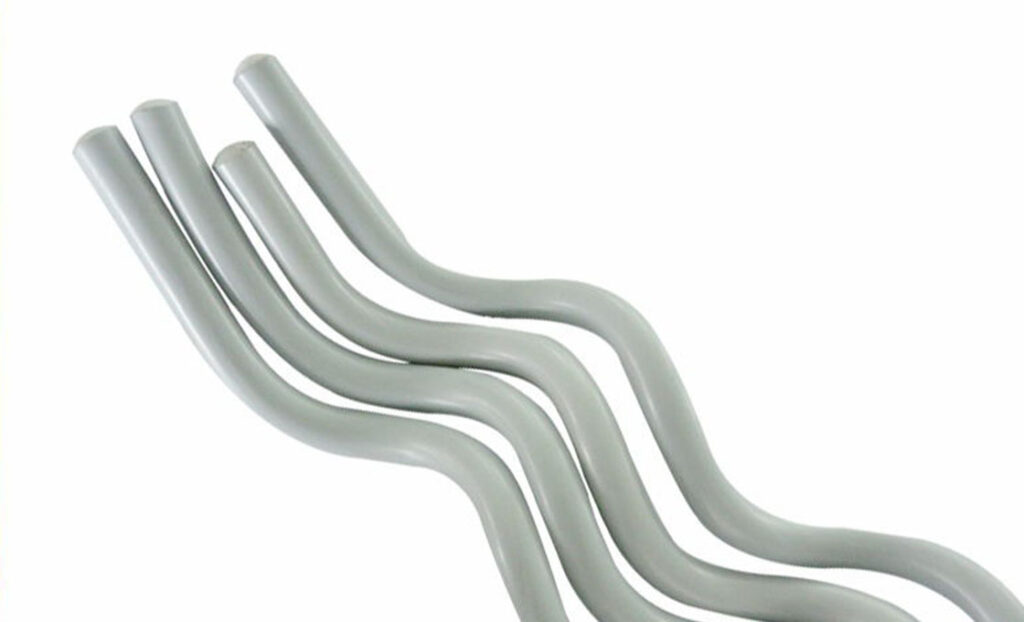
- Reducing aeolian vibrations from wind turbines and strong winds—windy regions create steady, high-velocity airflows. The winds cause cables and conductors to oscillate, which leads to fatigue and potential breakage at suspension points. Spiral vibration dampers disrupt the vibration wave along the conductor by introducing damping friction.
- Preventing mechanical fatigue and conductor damage—vibrations can cause metal fatigue, strand breakage, or loosening of fittings over time. The vibration dampers absorb mechanical stress by converting vibrational energy into low-intensity friction heat.
- Enhancing transmission line reliability for wind energy projects – the National Electricity Company (ENDE) depends on a reliable grid to integrate variable renewable energy sources like wind. Vibration dampers maintain consistent energy delivery from wind farms, protect transmission integrity, and enable stable interconnection.
- Contribution to the efficiency and sustainability of wind energy systems—spiral vibration dampers extend the operational lifespan of transmission lines, reducing material waste and carbon emissions.
Spiral vibration dampers are speeding up wind development in Bolivia.
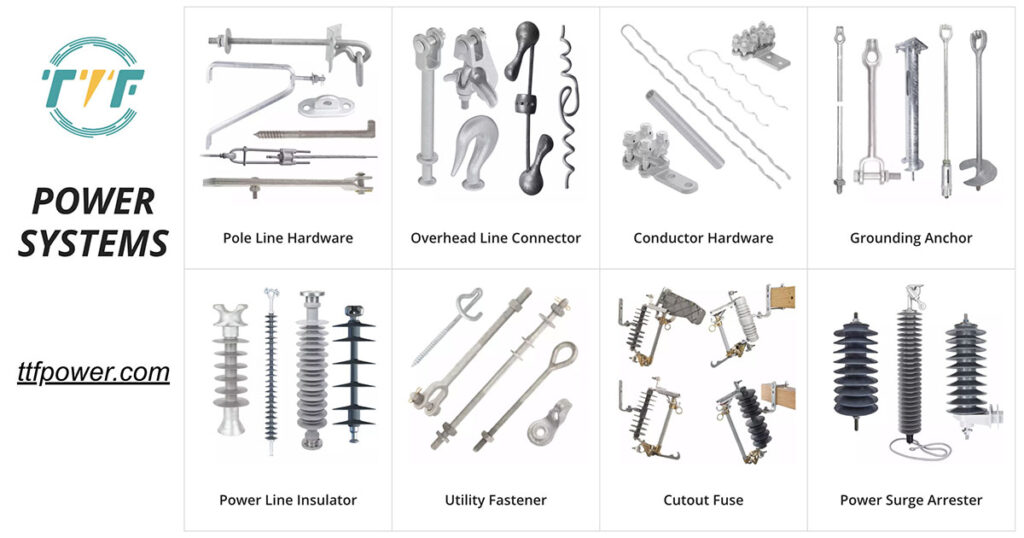
The use of vibration dampers helps speed up deployment, improve performance, and reduce operational risks. The dampers strengthen transmission reliability by absorbing and dissipating wind-induced energy. This helps to prevent metal fatigue and breakage. They reduce wear on conductors, clamps, and insulators. This leads to fewer emergency repairs and lower labor and equipment replacement costs. The funds saved from reduced maintenance can be redirected to expand capacity. This includes building more turbines, extending grid coverage, or upgrading substations. Spiral vibration dampers make the grid’s connections more stable by preventing conductor oscillations causing voltage fluctuations. This helps the grid absorb more renewable energy without costly reinforcements for faster commissioning of new wind plants.