
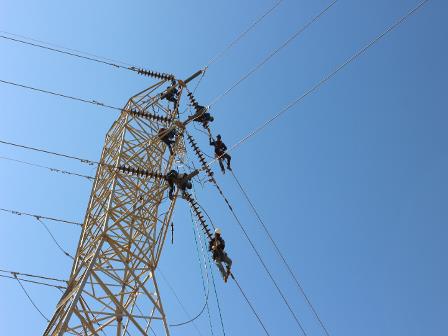
With increasing renewable energy production in Peru, the governmental agency for the promotion of private investment announced eight transmission line projects with a total investment of $557 million. Half of the projects will benefit 1.6 million inhabitants, while the remaining will enhance the energy supply for 2.3 million people in Arequipa, Lima, and Puno. The program aims to expand and reinforce the SEIN (Sistema Eléctrico Interconectado Nacional) and improve power quality in Peru. This project includes new high-voltage lines (220 kV and 500 kV) linking generation zones, substations and expansions, and regional feeders to improve reliability. This improves renewable share without sacrificing grid reliability. Additionally, sub-transmission and new substations make it easier to extend distribution to underserved regions. B-strand ground clamps are critical for the safety and reliability of the transmission lines and the entire grid.
The ground clamps are crucial for shielding the wire and intercepting lightning strikes before they hit the current-carrying phase conductors below. B-strand ground clamps provide the crucial electrical pathway to divert the high-voltage surge of the lightning strike from the shield wire down the transmission tower and into the ground. The lightning strike could arc to the phase conductors, causing a fault and triggering protection systems to shut down the line. This would lead to blackouts and affect the reliability that new lines provide. A B-strand ground clamp ensures a low-impedance path to earth. This is crucial for the proper operation of the grid’s protecting relays and circuit breakers. Proper grounding of towers ensures that the metal surface remains at or near ground potential during normal operations. The $557 million investment aims to create a modern, reliable, and efficient grid using components such as B-strand ground clamps.
B-strand ground clamps in Peru’s new transmission line development
Hardware reliability and grounding systems are crucial as towers, substations, and high-voltage lines roll out. B-strand ground clamps are mechanical connectors used to securely attach grounding conductors to overhead shield wires, guy strands, or grounding rods. They ensure low-resistance electrical continuity between grounding conductors and metallic structures. This allows safe dissipation of fault currents and lightning surges into the earth. Here are the roles of the clamp in new transmission line development.
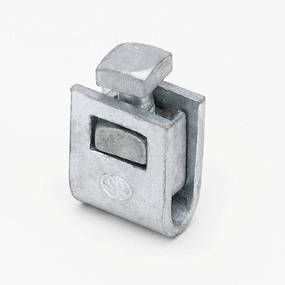
- Lightning and surge protection—transmission lines need reliable grounding to avoid damage in diverse conditions. B-strand ground clamps ensure secure bonding of shield wires to towers to reduce the risk of flashovers and outages.
- System reliability and safety—ground clamps provide consistent, low-impedance grounding paths. They ensure that if a fault occurs, currents safely divert into the soil. This protects linemen, equipment, and substations from step and touch potentials.
- Integration with renewable energy corridors—grounding is more necessary due to variable weather and fluctuating load conditions as Peru integrates solar and wind farms into the SEIN. B-strand ground clamps ensure effective fault clearing to help keep renewable generation stable on the grid.
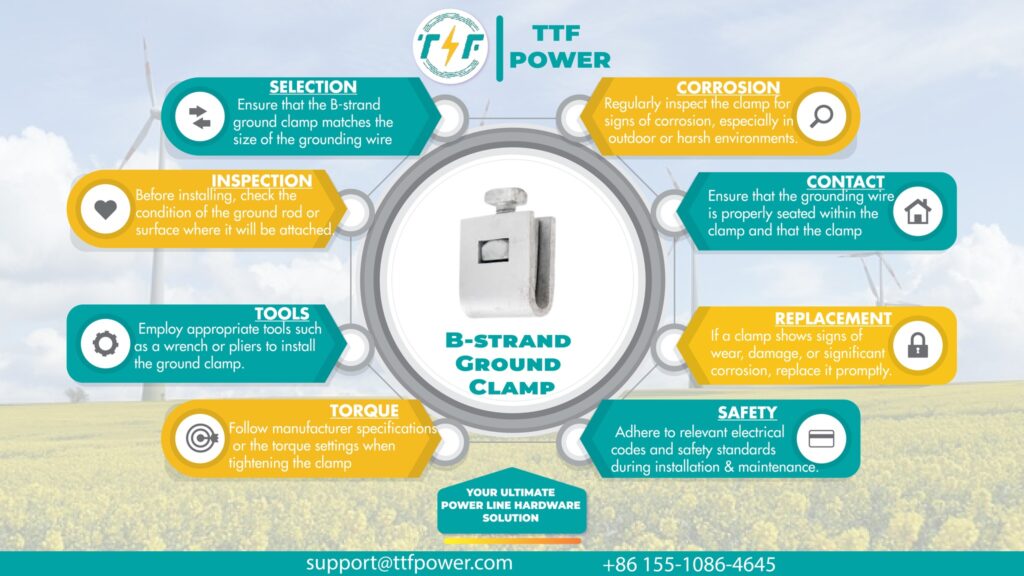
- Longevity in harsh environments—modern B-strand ground clamps are from tinned bronze or galvanized steel. This provides corrosion resistance and a long service life. Their durability reduces maintenance cycles for various projects.
- Support for efficient project delivery—B-strand ground clamps are quick to install and standardized to cut down construction time.
Impacts of new transmission line investments on Peru’s energy sector
Peru is moving forward with over $557 million in new transmission line investments, showcasing the most significant expansions in the grid. These projects are strategic investments that will reshape electricity generation, delivery, and consumption across the country. Key impacts include:
- Improved grid reliability and resilience—new high-voltage lines and substations help balance Peru’s SEIN by reducing congestion and adding redundancy. This reduces blackouts and voltage instabilities.
- Unlocking renewable energy potential – Peru’s renewable resources are often far from major consumption centers. Transmission lines act as the bridge connecting to the grid, without limitation.
- Lower system costs—transmission investments reduce technical losses and improve dispatch efficiency. This results in cheaper electricity generation and delivery.
- Expanding electricity access—new substations and feeders will improve levels in underserved regions. This helps support rural electrification, social inclusion, and economic opportunities in remote communities.
- Strengthening industrial growth—transmission upgrades provide the energy security that large-scale industrial projects demand. This increases investor confidence and industrial diversification.