
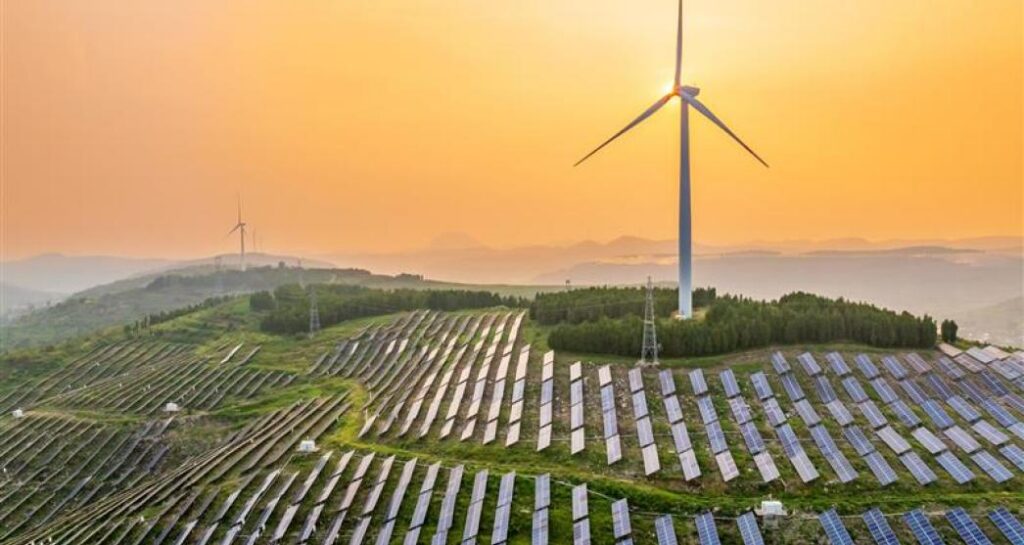
Brazil is taking measures to expand its renewable energy and transition away from fossil fuels. The country depends on hydropower, wind, and solar. However, the energy transition faces challenges with oil and natural gas supporting transport, industry, electricity generation, and export revenue. Brazil needs to find ways to expand clean energy while reducing its dependence on fossil fuel production and consumption. Solar and wind resources in Brazil offer more options to diversify electricity supply and reduce reliance on thermal power plants. The expansion creates extra demand for transmission infrastructure. This requires transmission lines equipped with conductors, polymer deadend insulators, suspension clamps, and grounding connectors. However, Brazil is increasing renewable electricity generation while expanding offshore petroleum production. This expansion creates an economic challenge for the transition. Therefore, Brazil needs to expand renewable energy while managing the economic and infrastructure consequences of reducing fossil fuel dependence.
Brazil must expand its transmission network to connect new generation capacity to industrial centers, cities, and distribution networks. The development demands transmission line capacity and conductor selection, insulator performance under electrical and environmental stress, and mechanical strength of suspension and deadend fittings. Polymer deadend insulators mechanically anchor and terminate conductors while insulating them. They handle high tensile loads at connection points and resist environmental degradation. Deadend insulators handle the horizontal tensile load of the conductor. They serve at dead ends, substations, and sharp-angle structures to secure the line and prevent it from pulling loose. Polymer deadend insulators isolate the live high-voltage conductor from the grounded tower structure. The silicone rubber housing provides dielectric strength and leakage distance to prevent current from arcing to the ground.
Quality assurance for polymer deadend insulators used in energy transition infrastructure
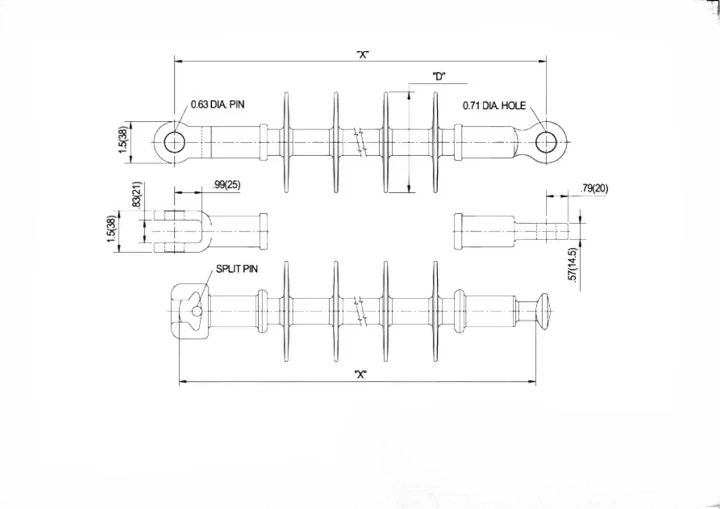
Brazil’s transition to renewable energy increases the need for reliable electrical transmission and distribution infrastructure. Solar farms, wind power projects, and high-voltage transmission networks need durable insulators that can withstand mechanical loads and electrical stress. Polymer deadend insulators support conductors at termination points and transfer conductor tension to supporting structures. Their performance affects the mechanical stability and electrical reliability of overhead power lines. Conducting quality assurance helps verify the materials, mechanical strength, electrical insulation properties, and weather resistance of each insulator. Polymer insulators use a lightweight insulating housing made from silicone rubber around a reinforced structural core. In renewable energy infrastructure, the insulators serve at conductor termination points, strain structures, and transmission line sections where conductors change direction. Their lightweight construction can reduce structural loading and simplify transportation and installation. Quality assurance for polymer deadend insulators is essential since they experience coastal salt contamination, high temperatures, and mechanical loading.
Polymer deadend insulators supporting Brazil’s energy transition
Polymer deadend insulators provide electrical insulation and mechanical support at conductor termination points along overhead transmission and distribution lines. Their key roles include:
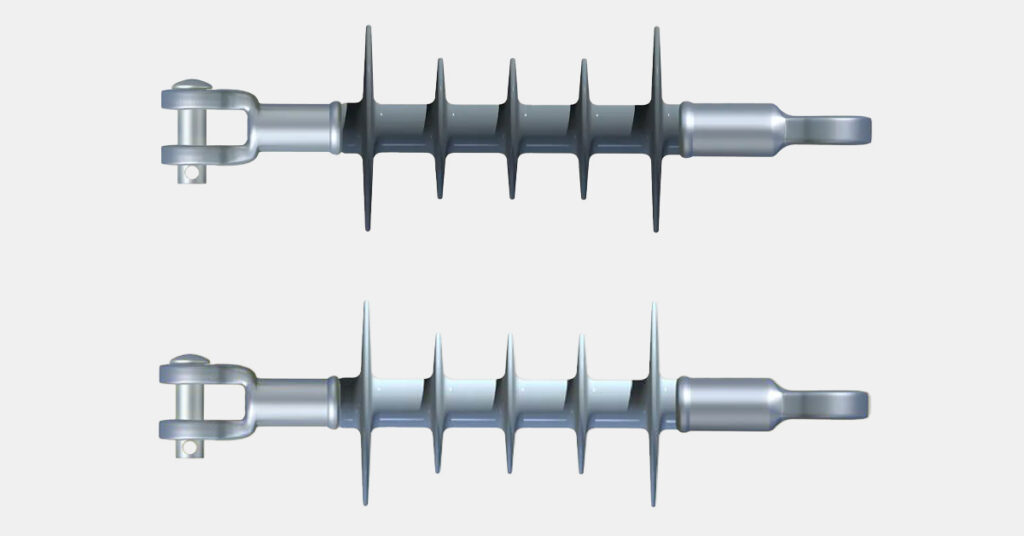
- Providing mechanical support at conductor termination points: at dead-end structures, the insulators transfer tensile forces to the supporting tower through their end fittings. The insulator maintains the specified conductor tension and transfers mechanical loads to transmission towers.
- Maintaining electrical insulation and preventing current leakage: polymer dead-end insulators provide electrical separation through their insulating core and external silicone rubber housing. The insulation helps prevent current from flowing through supporting structures under normal operating conditions.
- Improving transmission reliability in diverse environments: the insulators have different properties that offer protection against environmental contamination, UV exposure, and moisture.
- Supporting transmission construction: polymer dead-end insulators reduce the weight of insulator assemblies installed on transmission structures.
- Supporting high-voltage transmission expansion: it demands insulators designed for different voltage levels and mechanical loading conditions.
Measures supporting Brazil’s energy transition goals
Brazil has potential to speed up its transition from fossil fuels to renewable energy. The country generates its electricity from hydropower and has expanded its wind and solar capacity. Brazil also has oil and natural gas that remain important to its economy. The country should enhance policies that reduce fuel consumption, increase renewable energy investment, and strengthen the infrastructure connecting clean energy projects to consumers. The country can support renewable energy expansion through providing predictable regulations for renewable energy developers and offering competitive financing for solar and wind projects. This expansion will create demand for transmission towers, conductors, polymer insulators, and suspension clamps. These will help strengthen distribution networks to accommodate rooftop solar, electric vehicle charging, and other forms of distributed electricity generation.