
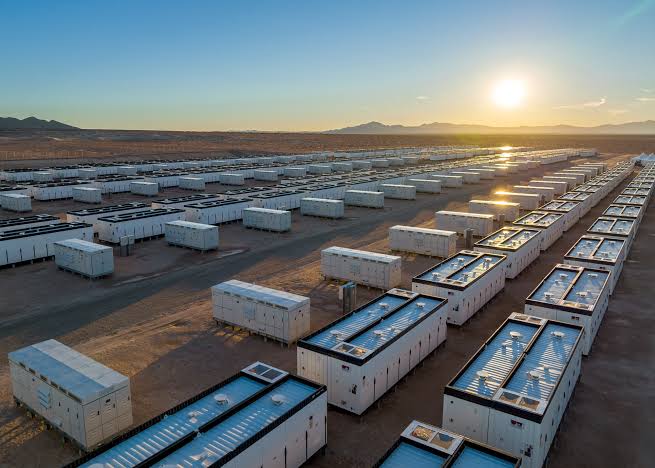
Brazil’s energy storage market is now entering a new phase of development from a demonstration-driven industry to a viable sector. More developers, utilities, industrial users, and renewable energy companies are investing in large-scale battery storage to improve grid reliability and integrate renewable energy. The increase in battery system orders shows the growing confidence in energy storage as a critical component of Brazil’s evolving power system. In the first quarter of 2026, an additional, 504 MWh battery storage orders were placed. This resulted in the cumulative volume of battery systems sold in Brazil reaching 1.9 GWh. Battery systems improve grid flexibility by balancing supply and demand, managing voltage fluctuations, providing frequency regulation, and supporting transmission infrastructure. These developments include equipment manufacturing, civil construction, electrical installation, and grid interconnection. These connections rely on robust hardware such as drop wire clamps. Drop wire clamps connect battery systems, renewables, and the grid.
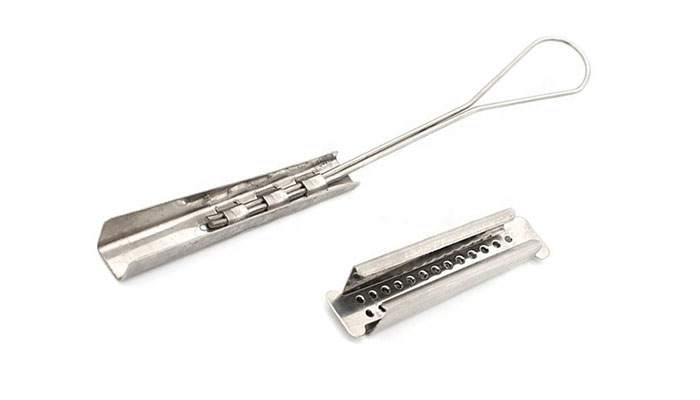
High-quality drop wire clamps provide physical security and stability for the cabling to ensure system reliability. They secure heavy-duty electrical cables to supporting structures like utility poles. They handle the mechanical load of the cables and prevent them from sagging, stretching, vibrating, or breaking due to their weight. The clamps help maintain the integrity of the electrical connection by relieving strain on connectors and terminals. Some clamps electrically isolate the live conductor from the supporting messenger wire. This is crucial to prevent ground faults and helps protect personnel. Additionally, the clamps help protect the cables from environmental damage caused by rain and UV radiation.
Quality assurance for drop wire clamps used in battery storage systems
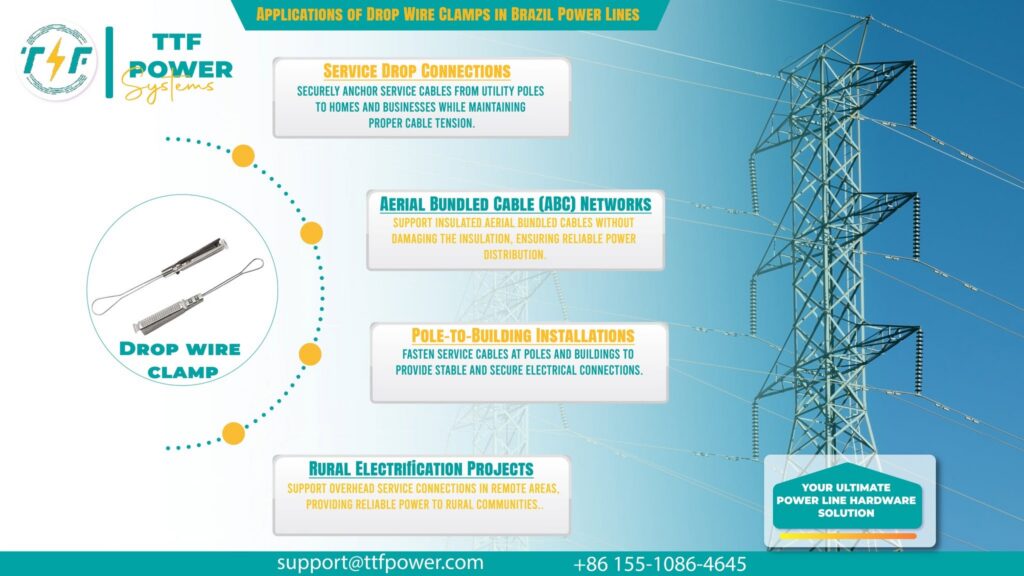
Drop wire clamps support low-voltage aerial service cables, communication lines, monitoring systems, and control circuits. This enables reliable operation of utility-scale and distributed battery storage installations. Conducting quality assurance ensures the clamps maintain mechanical integrity, electrical safety, and reliability under Brazil’s diverse environmental conditions. Battery storage facilities rely on continuous communication between battery management systems, SCADA, inverters, protection relays, and weather monitoring equipment. Dropwire clamps secure the overhead cables supporting communication and auxiliary power networks. Poor-quality clamps can cause cable sagging, conductor damage, communication interruptions, and increased maintenance costs. QA reduces these risks by ensuring each clamp meets specified mechanical, environmental, and material performance requirements before installation. QA covers raw material inspection, dimensional accuracy, mechanical performance testing, corrosion resistance testing, and installation quality control.
Functions of the drop wire clamps in battery storage and interconnection systems
Drop wire clamps anchor and support aerial service cables, fiber optic drop cables, and communication conductors. The clamps ensure the reliability of communication, monitoring, and auxiliary electrical networks that enable efficient operation of the entire storage infrastructure. Here are their key functions in the interconnection infrastructure.
- Supporting communication networks—modern battery energy storage systems depend on communication between the BMS, SCADA platform, inverters, transformers, and renewable energy plants. Drop wire clamps suspend fiber optic drop cables, Ethernet communication cables, control cables, and low-voltage signal conductors.
- Securing auxiliary power cables—drop wire clamps hold auxiliary overhead service cables, prevent excessive cable movement, and maintain proper cable routing. The auxiliary systems operate lighting, HVAC units, fire protection equipment, and monitoring devices.
- Maintaining cable tension – drop wire clamps maintain cable tension by preventing cable sag, maintaining clearances, and reducing mechanical strain on poles and structures.
- Protecting communication cable integrity – the clamps protect these cables by distributing mechanical loads and preventing insulation damage.
- Supporting grid interconnection infrastructure—the clamps support communication cables used for grid synchronization, frequency regulation commands, voltage control signals, and dispatch instructions.
Challenges to address in Brazil for successful integration
Battery energy storage system development in Brazil arises from the rapid growth in renewable energy and increasing demand for grid flexibility. However, the developers need to address various challenges to achieve large-scale and reliable integration of battery storage with Brazil’s transmission and distribution networks. These challenges include:
- Limited revenue streams—project developers need payment for ancillary services, capacity market participation, grid support service revenues, and fast frequency response.
- High initial capital costs – utility-scale battery systems need upfront investments for battery modules, power conversion systems, transformers, grid interconnection equipment, and fire protection systems.
- Transmission and distribution network constraints – renewable energy projects are often in remote areas. This leads to limited transmission capacity, grid congestion, delayed transmission expansion, and interconnection relays.
- Battery recycling and end-of-life management – Brazil must establish effective recycling and disposal systems. Efficient recycling reduces environmental impacts while recovering valuable materials.