

The advancement and enhancement of Argentina’s electrical infrastructure are essential for boosting wind and solar capacity, transforming renewable potential into a dependable national energy supply. Strong winds are prevalent in Patagonia, while solar energy capacity is growing in the central-western areas. The nation is putting money into new 132, 220, and 500 kV lines. The initiative enhances evacuation capability, reduces losses, and boosts interconnectivity. Enhancements in substations feature upgraded transformers with greater capacity, improved protection and control systems, and digital monitoring solutions. The improvements allow the infrastructure to manage different electricity currents from solar and wind sources. They do this while maintaining steady voltage and frequency. These recent developments lead to the employment of long-lasting hardware elements, like ceramic stay insulators
Guy strain insulators prevent the electrical current from a faulted or energized transmission tower from traveling down the guy wires. The current could electrify the entire anchor rod and the surrounding ground. The insulators must withstand the immense mechanical tension of the guy wires, which counterbalance the weight of the conductors. They ensure guy wires are grounded under fault conditions and help maintain system stability. Stay insulators are made from polymer or porcelain materials. These materials help break the electrochemical path that speeds corrosion in metal guy wires.
Technical specifications for stay insulators used in grid expansion infrastructure
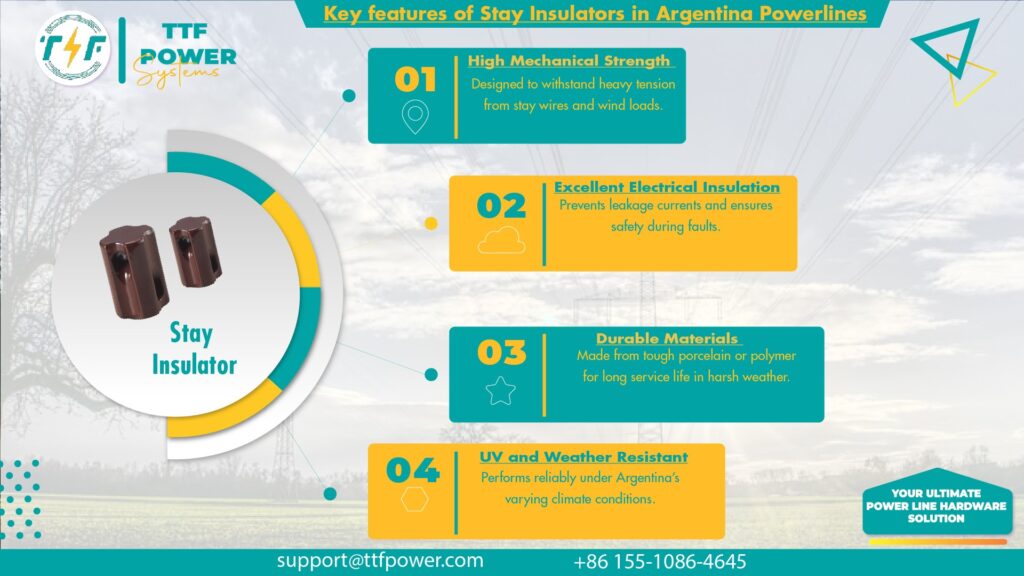
Stay insulators ensure mechanical isolation, electrical safety, and reliability of guyed structures. Their technical specifications are defined by mechanical loading, electrical insulation requirements, environmental exposure, and compliance with international standards. Stay insulators must withstand high tensile forces transmitted through stay wires that stabilize poles. These components play a structural role to ensure that new and upgraded grid infrastructure supporting renewable integration remain stable, secure, and reliable over their operational life. The specifications for stay insulators include electrical insulation performance, material and construction, durability requirements, and installation and operational considerations.
Functions of the stay insulators in Argentina’s grid expansion
Stay insulators perform safety, mechanical, and operational functions. These insulators are crucial for the stability of pole structures and the safe operation of expanded transmission and distribution networks. Stay insulators electrically isolate stay wires and stabilize guyed poles under increased mechanical loads. They also enhance operational safety and reliability for renewable-ready power networks. The following are the functions of stay insulators in grid expansion in Argentina.
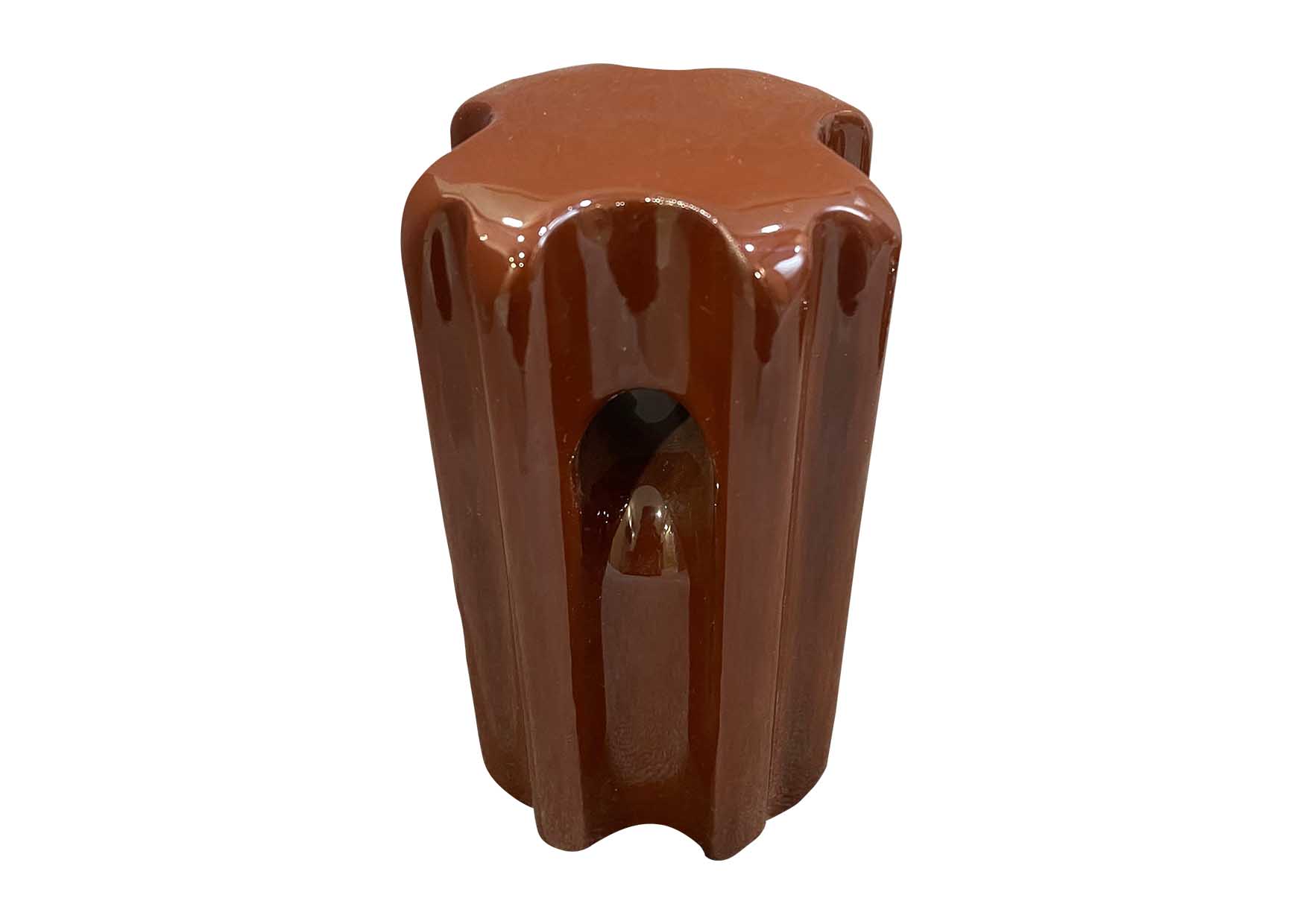
- Electrical isolation and public safety—the stay insulators isolate the lower portion of stay wires from live conductors. They prevent line voltage from being transmitted down the stay wire to ground level.
- Structural stability of guyed poles – stay insulators help stabilize poles that face unbalanced loads. Poles can increase mechanical stress due to higher conductor tensions, longer spans, and wind loading related to renewable lines. The insulators allow the stay wire to stabilize stay wires without compromising electrical safety.
- Managing mechanical loads under variable conditions – stay insulators maintain mechanical continuity in the guy system. They ensure that tensile loads are transferred and absorbed while preserving insulation integrity under dynamic loads.
- Supporting efficient construction and maintenance—stay insulators simplify construction by allowing standardized guying arrangements. They enable safer working conditions by limiting the spread of voltage along stay wires.
The operational and technical importance of Argentina’s system growth for integrating renewable energy.
Argentina’s grid enhancements change the operation of the power system, facilitating greater renewable integration. It accomplishes this while maintaining reliability, effectiveness, and system safety. Enhancing transmission capacity improves system stability, reduces curtailment, and increases operational flexibility. Grid expansion forms the basis of Argentina’s strategy for integrating renewable energy. Aquí se presenta la importancia de la expansión de la red en Argentina.
- Enhanced transmission and evacuation capacity—new high-voltage and sub-transmission lines boost the grid’s capability to transfer electricity from renewable-rich areas to consumption hubs. This tackles congestion limitations that restrict the production of solar and wind facilities.
- Improvements in voltage and frequency stability – renewable energy sources bring variability and decrease system inertia. Grid enlargement pairs with enhanced substations and contemporary protection systems to enhance voltage regulation and frequency management.
- Compatibility with contemporary conductors and equipment—grid enhancements allow for the use of higher-capacity and higher-temperature conductors, sophisticated line fittings, and enhanced insulation systems. These enhancements enable increased power to travel through each line while maintaining thermal limits.
- Enhanced fault management and coordination of protection—broadened networks use advanced protection, automation, and monitoring technologies. The systems improve the detection, isolation, and recovery of faults. This is essential in a grid with a large proportion of inverter-based renewable energy production.